
Key points
- The peak viewing time was said to be after sunset on February 28, 2026, and the six planets lined up were Mercury, Venus, Saturn, Jupiter, Uranus and Neptune (Mars was not included).
- Four of them, Mercury, Venus, Saturn and Jupiter, were potentially visible to the naked eye, and Venus (the evening star) was the most conspicuous.
- Uranus is said to require binoculars and Neptune a telescope; they are generally hard to see with the naked eye.
- A "planetary alignment" is not the planets lining up in a straight line in space; it is an apparent arrangement along the ecliptic as seen from Earth (a gentle arc).
- No scientific basis has been found for the claim that "planetary alignments cause earthquakes or disasters."
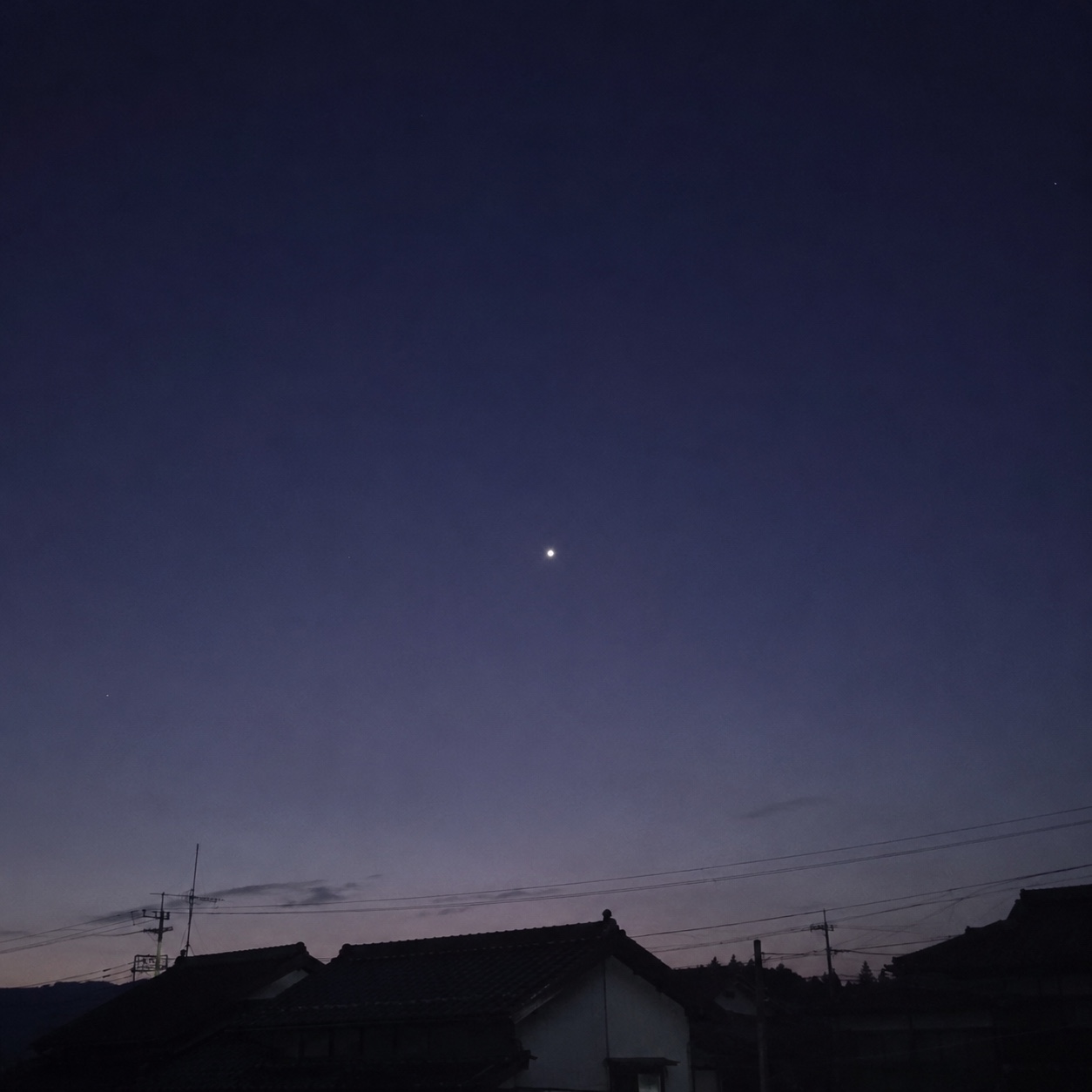
The "planetary alignment" or "planet parade" was a topic of interest in February 2026. Many astronomy guides gave the peak viewing time as after sunset on February 28, 2026. This article sets out the facts: when, in which direction and which planets could be seen, how to avoid confusing bright planets with UFOs, and how to treat the folklore that "something unusual will happen." Exact times and directions vary with the latitude and longitude of your location and with the weather, so we recommend cross-checking with a star chart app in the end. The February 28, 2026 parade is over, but arrangements in which several planets appear lined up in the same part of the sky continue to occur, with different combinations of planets.
What was the planetary alignment of February 28, 2026?
What was visible after sunset on February 28, 2026 was an arrangement called a "planet parade," in which six planets (Mercury, Venus, Saturn, Jupiter, Uranus and Neptune) lined up together across the sky. Mars was not part of this line-up; a separate parade including Mars was reported to be visible before sunrise around August 12, 2026.
What deserves attention here is what the term "planetary alignment" actually means. It is not a phenomenon in which the planets line up neatly in a straight line in space. It is an apparent arrangement in which, as seen from Earth, the planets appear grouped in the same part of the sky along their path, the ecliptic. Astronomy guides outside Japan also explain that it is not a perfect straight line in space but a gentle arc along the ecliptic.
A "planetary alignment" is an apparent arrangement
Directions, times and the planets visible to the naked eye
The suggested time to start observing was about 30 minutes after sunset. Mercury, Venus and Saturn were reported to be low in the west, and Jupiter high in the southeast to east. The most conspicuous marker was Venus (the evening star), followed by Jupiter as the next easiest to find.
For Tokyo, one guide gave sunset at about 17:35 JST (08:35 UTC) and suggested observing from about 18:05 JST (09:05 UTC). However, both sunset times and the directions in which the planets appear differ with latitude and longitude, so these figures did not apply as they are everywhere. When looking for planets, it is a good idea to check the directions and times for your own area with a star chart app.
Scroll the table sideways →
| Planet | Approximate direction and height | Naked-eye visibility |
|---|---|---|
| Venus | Western sky; the brightest and most conspicuous | Easily visible to the naked eye (the evening star) |
| Jupiter | High in the southeast to east | Easily visible to the naked eye |
| Saturn | Low in the west | Visible to the naked eye, depending on conditions |
| Mercury | Very low in the west, for a short time | Visible to the naked eye, but highly dependent on conditions |
| Uranus | In the area near Jupiter | Said to require binoculars |
| Neptune | Fairly low | Said to require a telescope |
Mercury is very low in the west and visible for only a short time, which makes it hard to find. English-language guides even describe it as "blink-and-you-miss-it," and whether you can see it with the naked eye depends heavily on the weather at your location and how open your western horizon is.
Uranus and Neptune need binoculars or a telescope
Of the six planets, four (Mercury, Venus, Saturn and Jupiter) had a chance of being seen with the naked eye. The remaining two, Uranus and Neptune, are faint; Uranus is generally said to require binoculars and Neptune a telescope, and confirming them with the naked eye alone is considered difficult.
- 1First find Venus, the brightest, in the western sky and use it as your reference point.
- 2Next, locate Jupiter high in the southeast to east.
- 3Saturn and Mercury are low in the west; aim for the short window before the sky gets too dark.
- 4If you want to see Uranus and Neptune as well, bring binoculars or a telescope and check their positions on a star chart app before searching.
Avoiding mistaking bright planets for UFOs
Apart from the Sun and the Moon, Venus and Jupiter are considered among the brightest objects in the sky, and people who are not used to seeing them can take them for unknown glowing objects. Planets low in the sky in particular can flicker or appear to change color because of atmospheric turbulence, and when they slip in and out of gaps in the clouds they can seem to be "appearing and disappearing."
Planets shift position slowly over time, but over a short observation they look like "a bright light standing still in roughly the same place." For a light that does not blink, keeps a steady brightness and stays in the same place for a long time, the basic first step is to consider planets and stars. A blinking light moving in a straight line is most likely an aircraft, and a non-blinking point of light crossing the sky at a constant speed is most likely a satellite or similar.
Check these first
How to treat the claim that "planetary alignments cause disasters"
Every time there is a planetary alignment, claims tend to spread that "a major earthquake or disaster will happen." However, no scientific basis has been found for these claims. Even when the gravitational and tidal forces of several planets are added together, they are said to fall far short of the scale needed to cause a disaster on Earth.
Earthquakes are attributed to the movement of tectonic plates, and no clear causal link with planetary alignments has been established. Alarming information sometimes gets attached to astronomical events that attract attention, but here it is enough to keep in mind that no basis has been found. A planet parade is best taken as a chance to look calmly at the positions of the bright planets.
Check alarming claims against the facts
FAQ
When was the 2026 planetary alignment visible?+
The peak viewing time was after sunset on February 28, 2026. The suggested time to start observing was about 30 minutes after sunset, with several planets lined up low in the west and in the southeastern to eastern sky. Sunset times and directions differ by region, so when looking for planets the reliable approach is to check the information for your own location with a star chart app.
How many planets can you see with the naked eye?+
In the February 28, 2026 parade, four had a chance of being seen with the naked eye: Mercury, Venus, Saturn and Jupiter. Of these, Venus (the evening star) was the brightest and most conspicuous. Mercury is very low in the west and visible for only a short time, and whether you can see it depends heavily on the weather and how open your horizon is. Uranus generally requires binoculars and Neptune a telescope.
Is it true that planetary alignments cause disasters?+
No scientific basis has been found. Even when the gravitational and tidal forces of several planets are added together, they are said to fall far short of the scale needed to cause a disaster on Earth. Earthquakes are attributed to the movement of tectonic plates, and no clear causal link with planetary alignments has been established.
If a bright star seems to move, is it a UFO?+
Not necessarily. There is a known visual phenomenon (the autokinetic effect) in which a stationary point of light seems to move if you keep staring at it in the dark, and near the horizon atmospheric turbulence can also make a light waver. For a bright light that does not blink and stays in the same place for a long time, the basic approach is to consider planets and stars first, record the date, time and direction, and cross-check with a star chart app.
UFO Kanteishi Exam, Grade 3
Free, no account needed. 20 questions on observing, recording and cross-checking. Pass and get a certificate with a verifiable number.
To become a Licensed UFO Kanteishi, take Grade 2 (Official Guide + exam).
Related reading
Why Venus Gets Mistaken for a UFO
Most very bright "stars" at dusk or dawn are Venus or Jupiter. How atmospheric turbulence and the autokinetic effect make them seem to move, and how to tell a planet.
Read
5 Things to Check About a Light in the Night Sky
Five observation points for identifying lights in the night sky. Based on NAOJ's list, a step-by-step guide and table for planets, satellites, contrails and more.
Read