

LEARN
Treat the unidentified correctly: as unidentified.
How to identify what people see, key terms, cases and culture. The knowledge behind the UFO Kanteishi Exam, written up as fact-based reading. Useful before the exam, or simply out of curiosity.
 START HEREWhat is a UFO?What the term means, how it differs from UAP, what is most often mistaken for one, and the history and famous cases, on one page.GLOSSARYUFO/UAP glossaryRoswell, Starlink, pareidolia and more, explained term by term.
UPCOMING SKY EVENTS
How to Identify
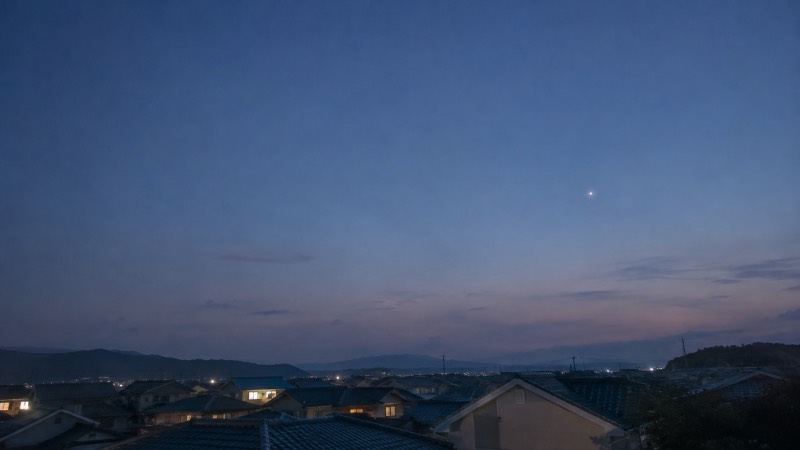
What is that bright light in the sky tonight?
See which bright planets and stars are in your sky tonight, calculated for your location, then match what you saw: planet, twinkling star, satellite, Starlink or aircraft.
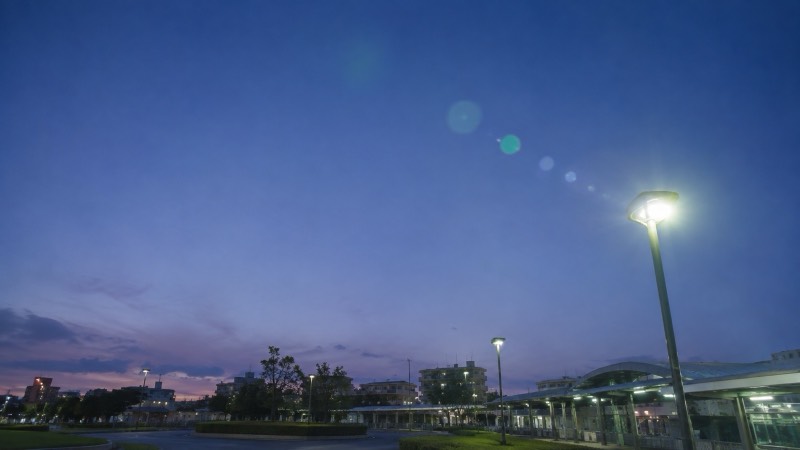
How to identify UFOs
Most sightings turn out to be known phenomena such as fireballs, satellites, balloons and aircraft. The basics of telling them apart by observing, recording and cross-checking, with a quick-reference table and FAQ.
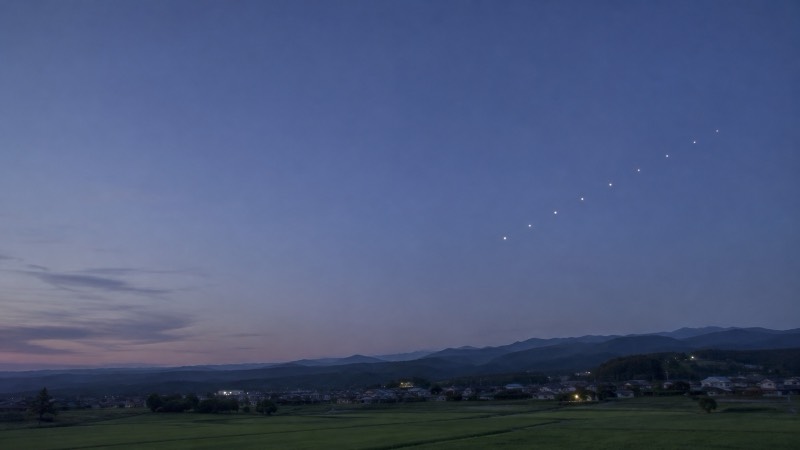
Mistaking Starlink for a UFO: how to tell a line of lights apart
Most lights moving across the night sky in a single line are Starlink satellites (a "satellite train"). When they are visible, and how to tell them from UFOs and aircraft.
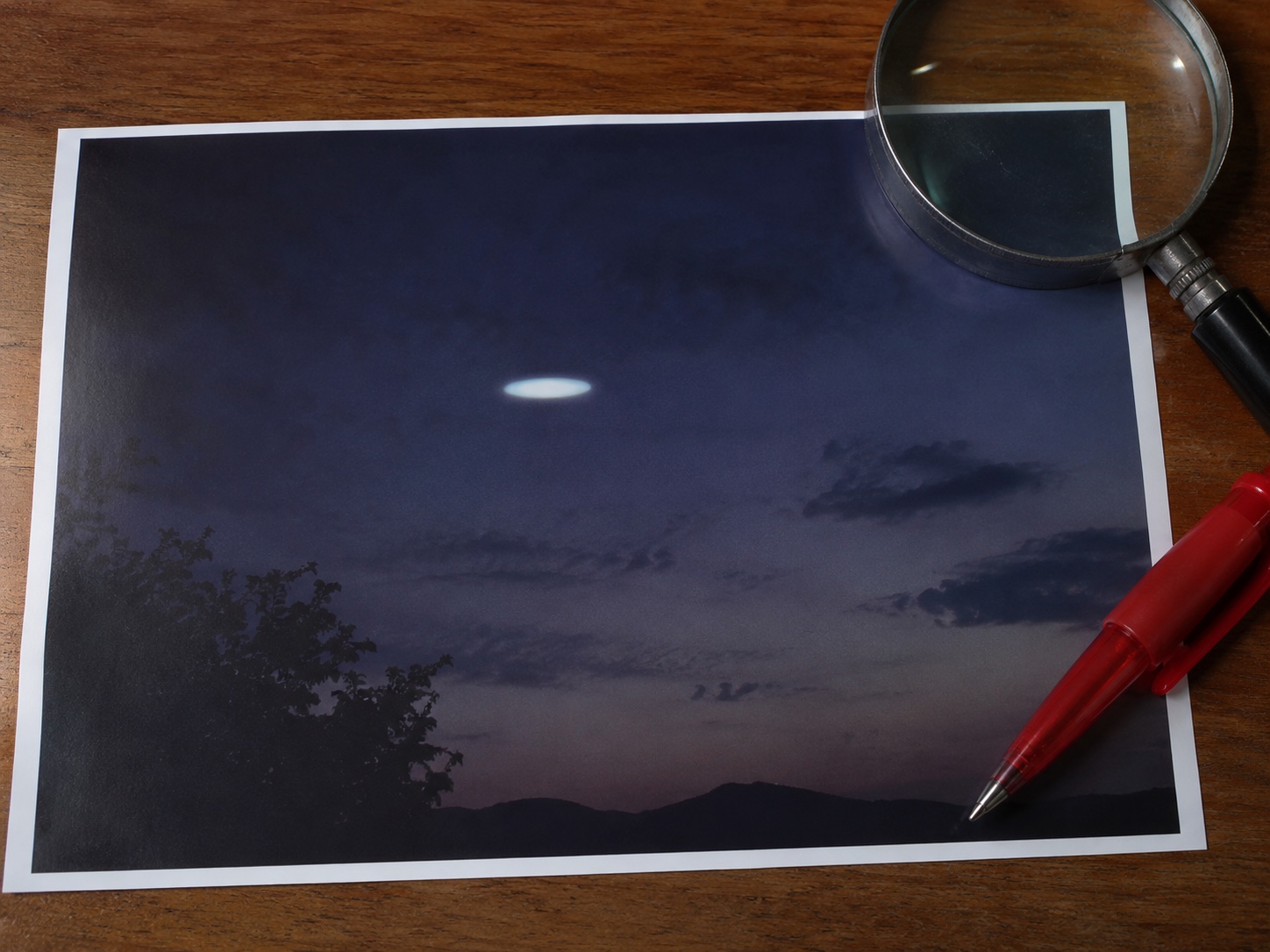
How to analyze a UFO photo: 6 steps to check what the light is
Checking the shooting data (Exif), reflections such as lens flare, editing and AI generation, where the image came from, and cross-checking against known phenomena.
How to report a UFO sighting
What to record first, and where to report in the US (AARO, FAA, NUFORC, MUFON), the UK and Canada.
Blue Flash in the Sky: What Causes It
A sudden blue or blue-green glow that lights up the sky is often an electrical fault in power equipment. How to tell it from lightning, a fireball or a twinkling star.

Green Light in the Sky: What It Usually Is
A green ball of light is often a fireball, a green glow is often the aurora, and a straight green beam is a laser. How to tell which one you saw.
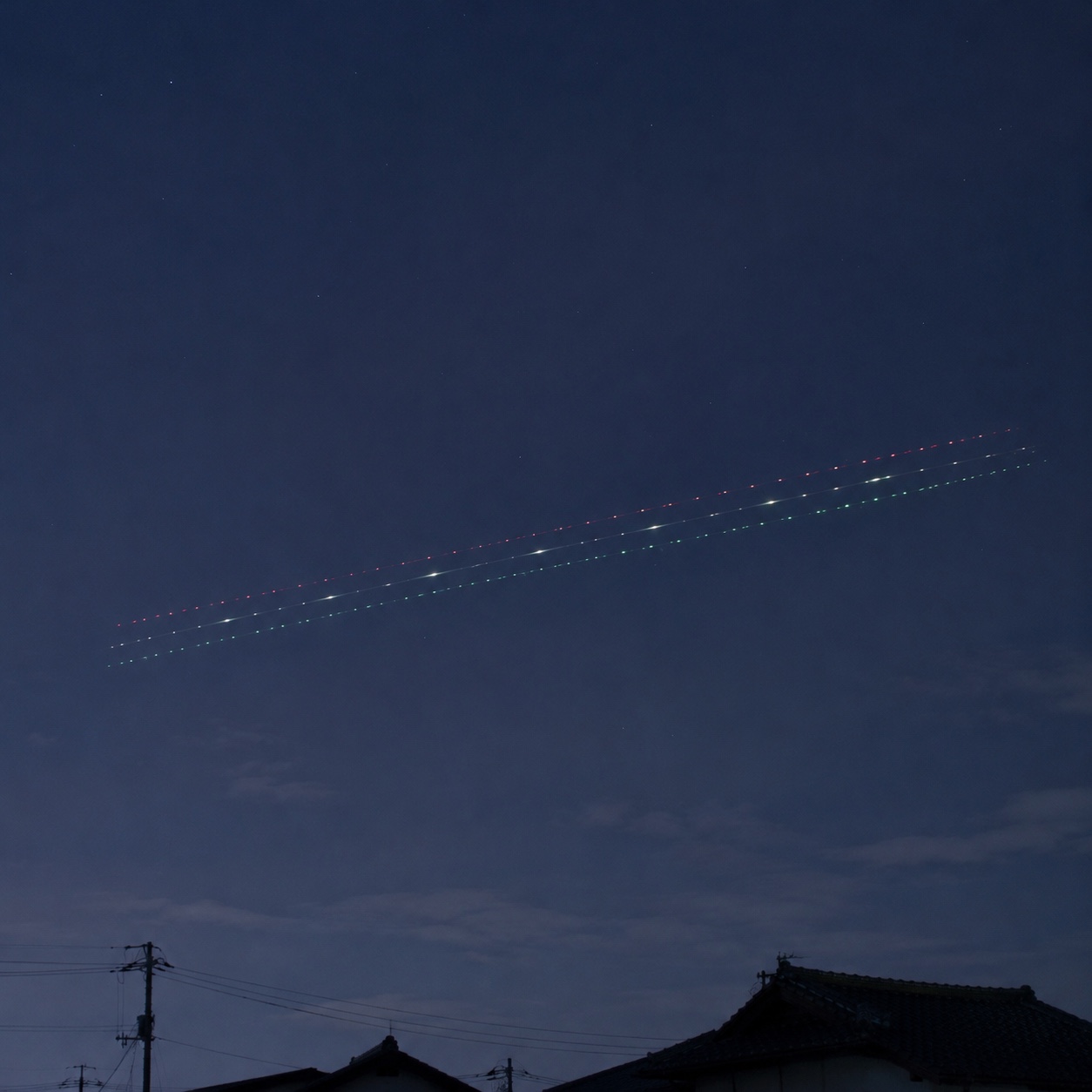
Red Light in the Sky: What It Usually Is
Mars, aircraft beacons, tower warning lights, sky lanterns, flares and drones: how to tell what a red light in the night sky is by color, blinking and movement.
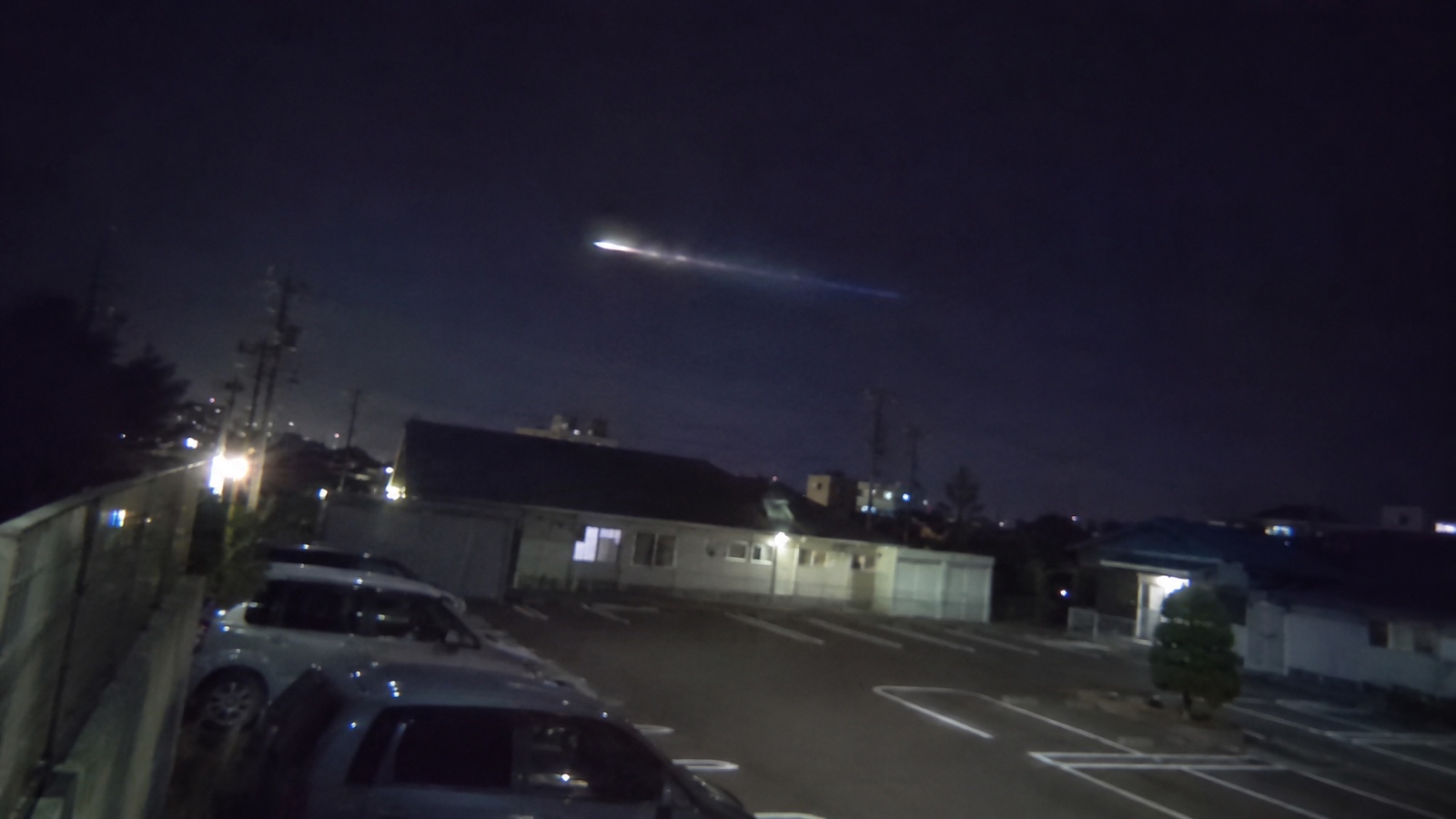
Spiral or Jellyfish Light in the Sky? A Rocket Launch
A glowing spiral, jellyfish-shaped cloud or bright point inside a smoke ring at dusk or dawn is usually a rocket's exhaust plume lit by the Sun. How to confirm it.
Satellite, Plane, Star or Planet? How to Tell
Blinking means aircraft, a steady moving point means a satellite, and a light that stays put is a star or planet. A simple way to sort night-sky lights, with tools to confirm.
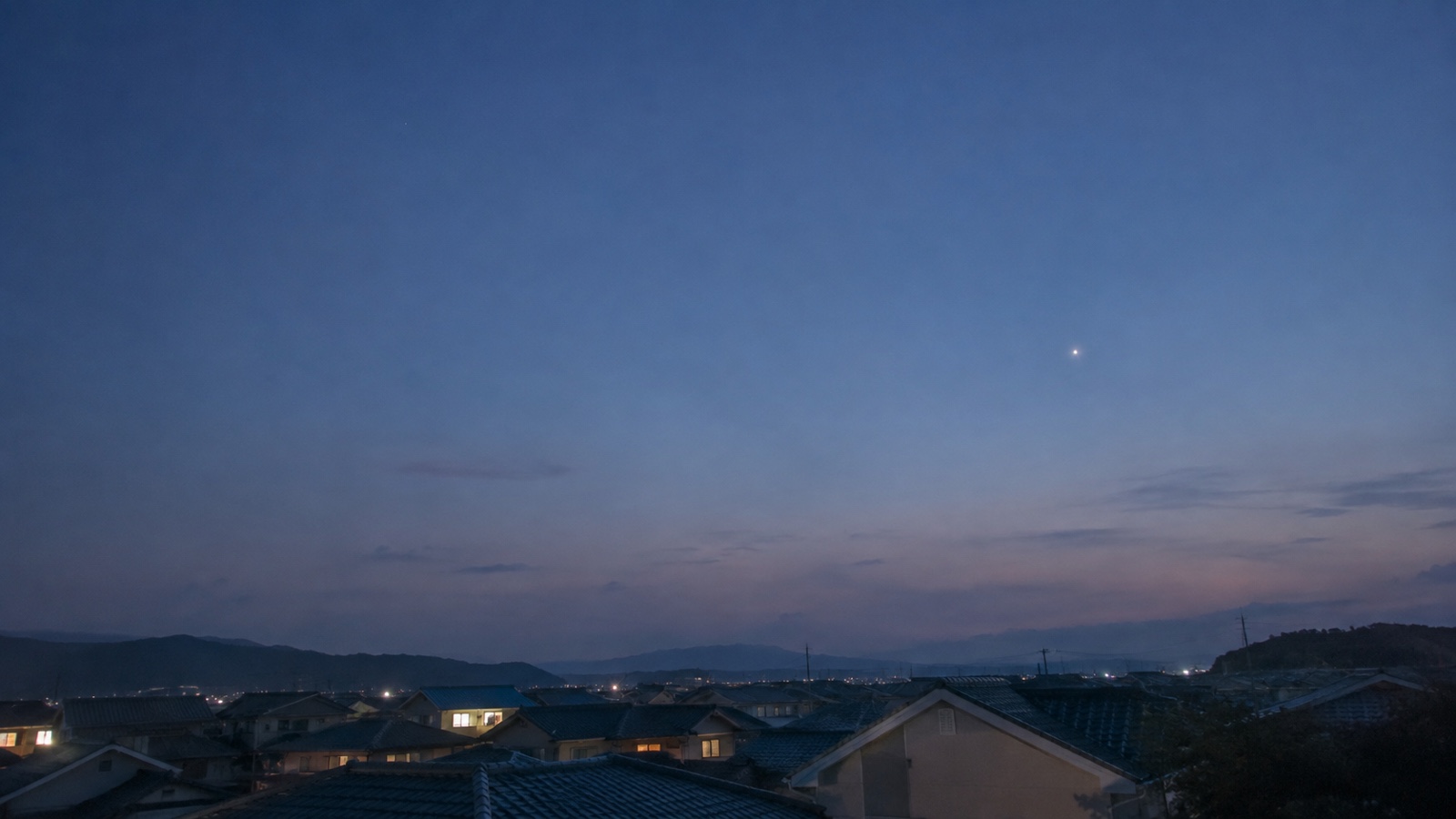
Why a Star Flashes Red, Green and Blue
A bright "star" near the horizon that flashes colors and seems to hover is usually Sirius or another bright star twinkling strongly. Why it happens and how to confirm it.

Triangle UFOs Explained
Aircraft formations, the Phoenix Lights flares, the Belgian wave hoax photo, stealth aircraft and drones: what usually explains triangular lights in the sky.
UFO Identification Chart
Steady, blinking, color-flashing, a line of lights, a hovering light: a chart that matches common sightings to their likely explanations and to tools for checking them.
Why Venus Gets Mistaken for a UFO
Most very bright "stars" at dusk or dawn are Venus or Jupiter. How atmospheric turbulence and the autokinetic effect make them seem to move, and how to tell a planet.
What Orbs in Photos Really Are
How to identify round "orbs" in photos, based on known phenomena: lens flare, lens ghosts, out-of-focus blur and ball lightning.

Fireballs vs. UFOs: How to Tell
Most bright balls of fire crossing the sky are fireballs (bright meteors). Breakup, glowing trains and delayed sound: what to look for to tell them from UFOs.
5 Things to Check About a Light in the Night Sky
Five observation points for identifying lights in the night sky. Based on NAOJ's list, a step-by-step guide and table for planets, satellites, contrails and more.
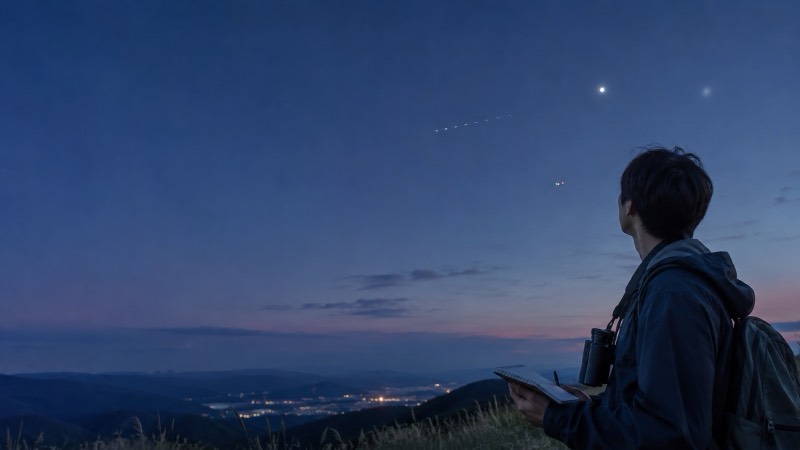
A Silent Light Crossing the Sky May Be the ISS
A silent, steady light moving straight across the night sky may be the ISS, orbiting about 400 km up every 90 minutes. How to tell it from aircraft and confirm with a forecast.

Identifying Planes Overhead with Flightradar24
How to check the flight, aircraft type and altitude of a plane overhead on Flightradar24, and how to recognize aircraft by their red, green and white lights.
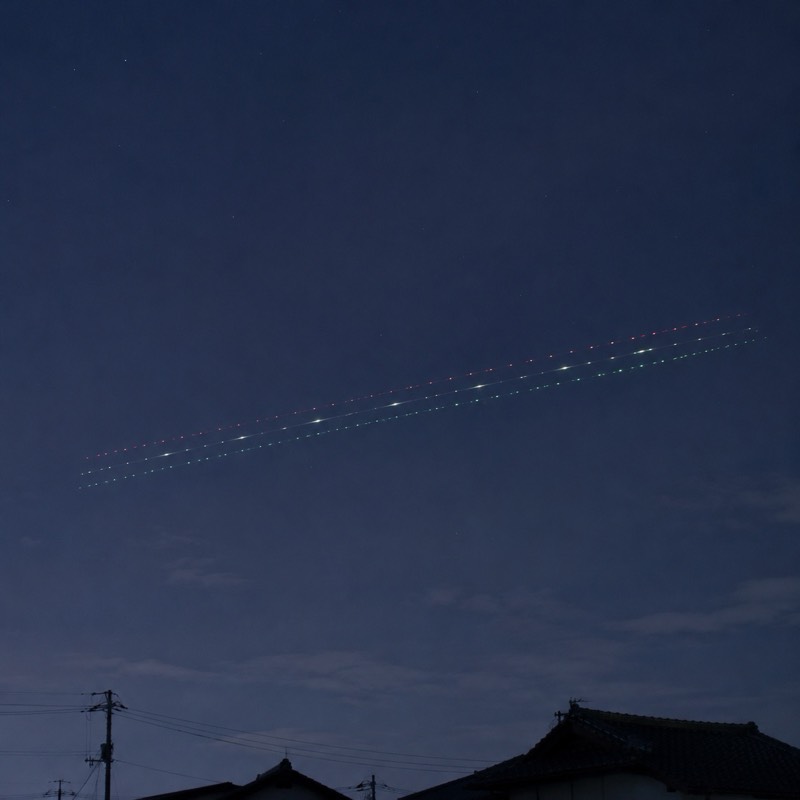
Drone or Aircraft? Telling Night Lights Apart
Use Japan's night-flight rules for drones, the colors and positions of aircraft navigation and anti-collision lights, and movement to identify a light in the night sky.
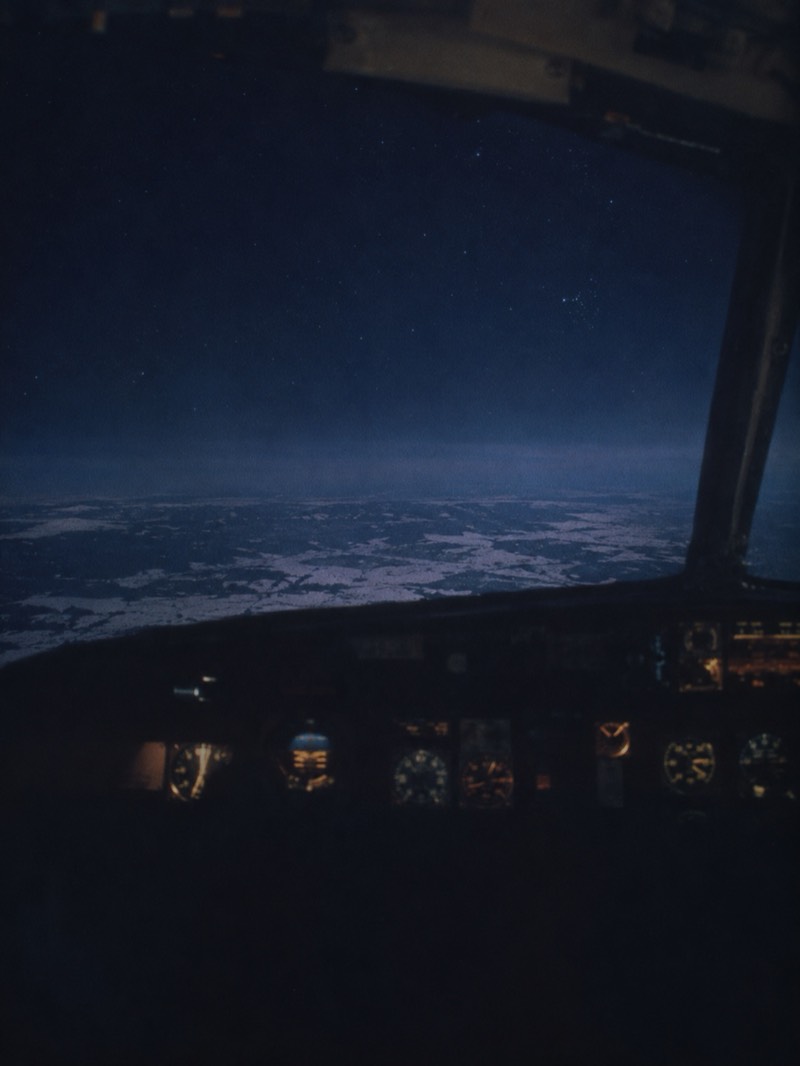
The FAA's UAP Reporting Rules
The FAA renamed UFOs "UAP" (unidentified anomalous phenomena) and set up a reporting path for pilots. The observation items a report needs, from primary sources.
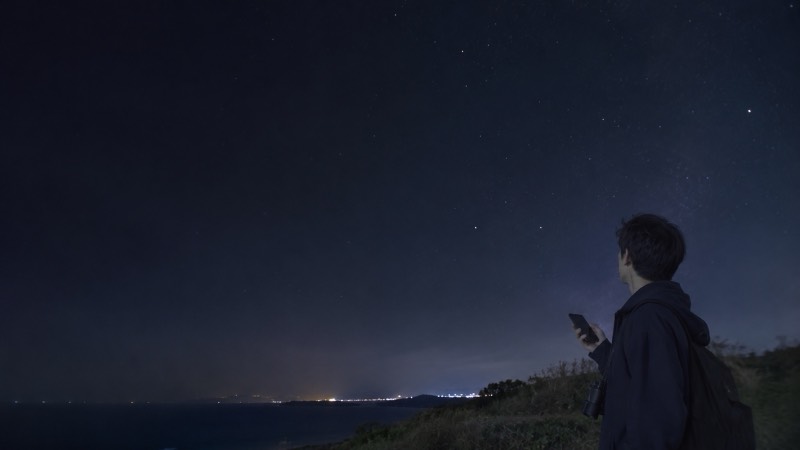
What Green Laser Beams in the Night Sky Are
Most straight green beams in the night sky come from atmospheric lidar or Earth-observation satellite lasers. What they are and how to identify them, based on real cases.
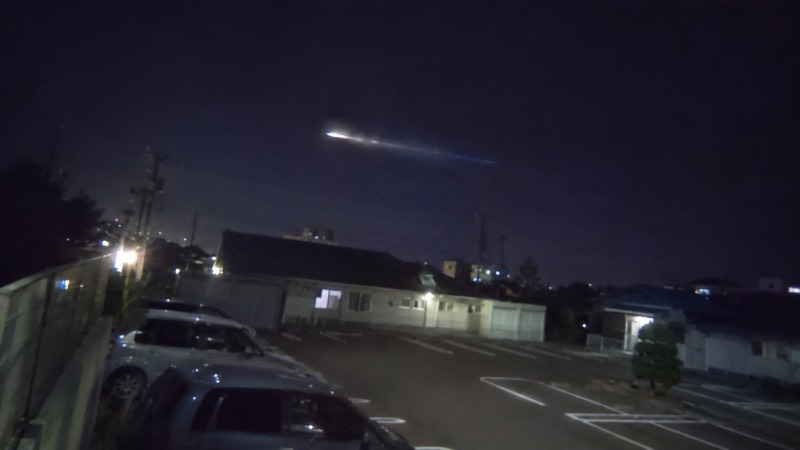
Rocket Reentries vs. UFOs: How to Tell
A fireball that drifts slowly for tens of seconds while breaking apart may be rocket debris or a satellite reentering. How it differs from a meteor, with reported cases.
Astronomy & Space
NASA's UAP Independent Study Report (2023)
Key points of NASA's September 2023 independent study report: no evidence of extraterrestrial origin, and a shortage of calibrated data with metadata and multiple measurements.
The March 3, 2026 Total Lunar Eclipse: The Facts
A total lunar eclipse seen across Japan. Its timing, why the Moon looks red, and whether the "bad omen" folklore holds up, checked against NAOJ announcements.
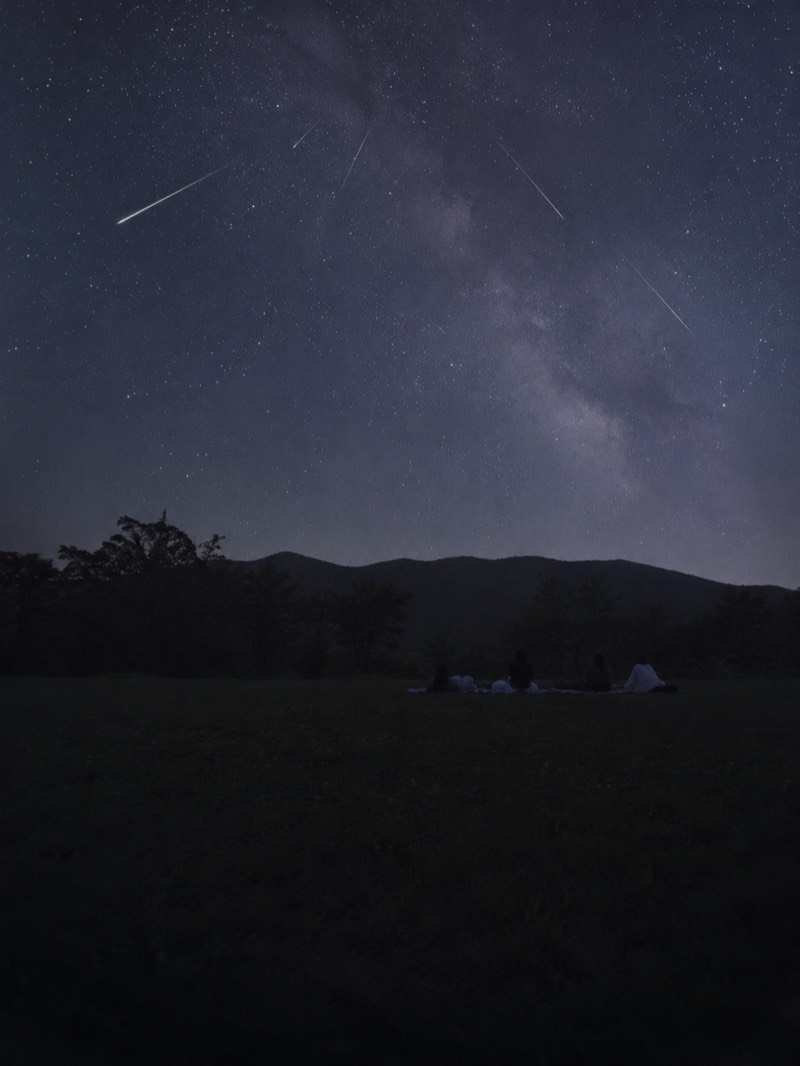
Perseids 2026: Best Times and Where to Look
The Perseid meteor shower peaked on August 13, 2026, with good new-moon conditions. When and where to look, and how to tell meteors from aircraft and satellites.
Geminids 2026: Best Viewing Times
When and where to look for the Geminids, which peak around December 14, 2026, with the moon conditions. Also the sharp post-peak drop and how to tell meteors from known phenomena.
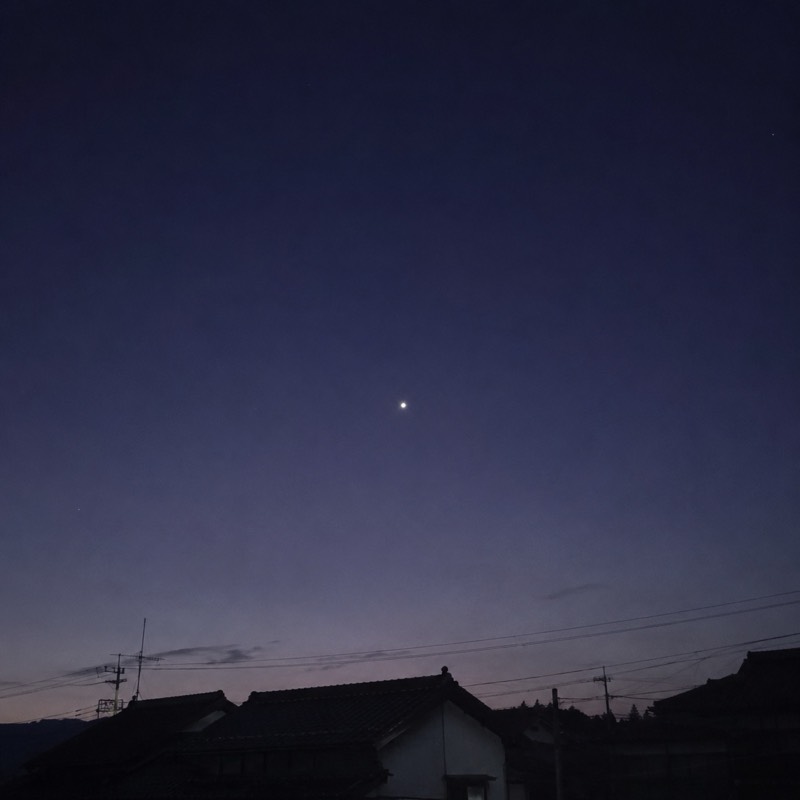
The February 28, 2026 Planet Parade
How the six-planet "planet parade" looked after sunset on February 28, 2026: which planets were visible to the naked eye and which needed binoculars, plus the facts on the folklore.
When Is the Supermoon in 2026?
The 2026 supermoon dates and why December 24 is said to be the biggest. Also how it compares with a normal full moon, and how to treat the folklore around full moons.
What Are Noctilucent Clouds? Sightings in Japan
Noctilucent clouds are ice crystals around 80 km up that glow blue-white by scattering sunlight. Sightings in Japan, why they draw attention, and how not to mistake glowing clouds for UAP.
Cases & History
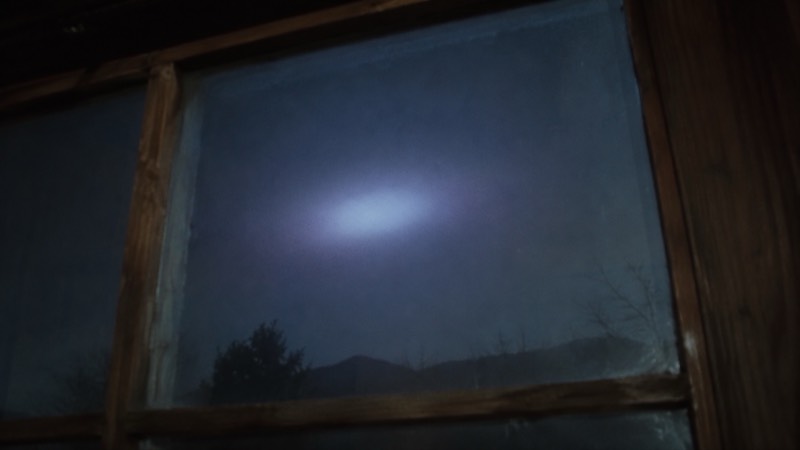
Famous UFO cases
Roswell, the JAL Flight 1628 incident, Rendlesham Forest, the Belgian UFO wave and more: historically well-known UFO/UAP cases, summarized on the basis of the facts.
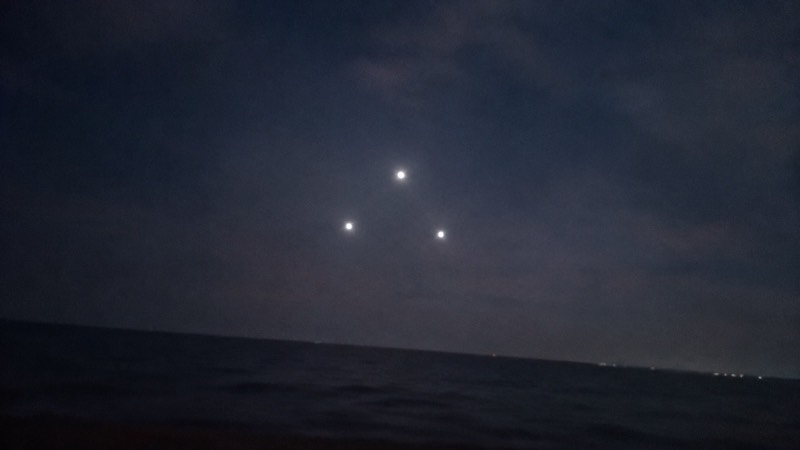
What is UFO Day (June 24)?
From the 1947 Kenneth Arnold sighting, which gave us the phrase "flying saucer," to the difference between UFO and UAP, on the basis of the facts.
New Jersey Drone Sightings (2024) Explained
What officials said about the 2024 New Jersey drone wave: lawful drones, manned aircraft and stars mistaken for drones, plus the January 2025 White House statement.
The Pentagon UFO Videos Explained
FLIR1 (Tic Tac), Gimbal and GoFast: when they were released, what they show, and what NASA and AARO concluded, including the 2025 GoFast resolution.

The Roswell Incident (1947)
The "flying disc" announcement, the balloon correction, and the 1994 and 1997 Air Force reports (Project Mogul, dummies), on the facts.
The JAL Flight 1628 UFO Incident (1986)
A JAL crew reported watching an object over Alaska for about 50 minutes. The FAA investigated without a conclusion. The facts, including the planet theory.
The Rendlesham Forest Incident (1980)
US airmen saw lights in a forest next to a US-run base in Suffolk, England. The facts, including the lighthouse, meteor and star explanations.
Japan's Three Great UFO Incidents
The Kofu, Kera and Nikoro incidents, with both sides laid out calmly, including skeptical assessments. A guide to reading primary sources.
The Kofu Incident (1975)
Two schoolboys in Kofu, Japan, reported a UFO in 1975. Their account, other witnesses and the reported traces, read on the principle that testimony is not evidence.
UFO Culture in Japan
Japan's Ministry of Defense UFO Policy (2020)
The September 2020 directive by Defense Minister Kono on "unidentifiable objects." Its three steps (report, record, analyze), checked against primary sources.
Fukushima's "UFO Village" at Mount Sengamori
Japan's "UFO Village" in Fukushima: Mount Sengamori, the UFO Fureai-kan museum and the UFO Research Institute's rating system, on the facts.
Cosmo Isle Hakui and Japan's UFO Town
A space science museum in Hakui, Ishikawa. How to view real space hardware and UFO materials as separate things.
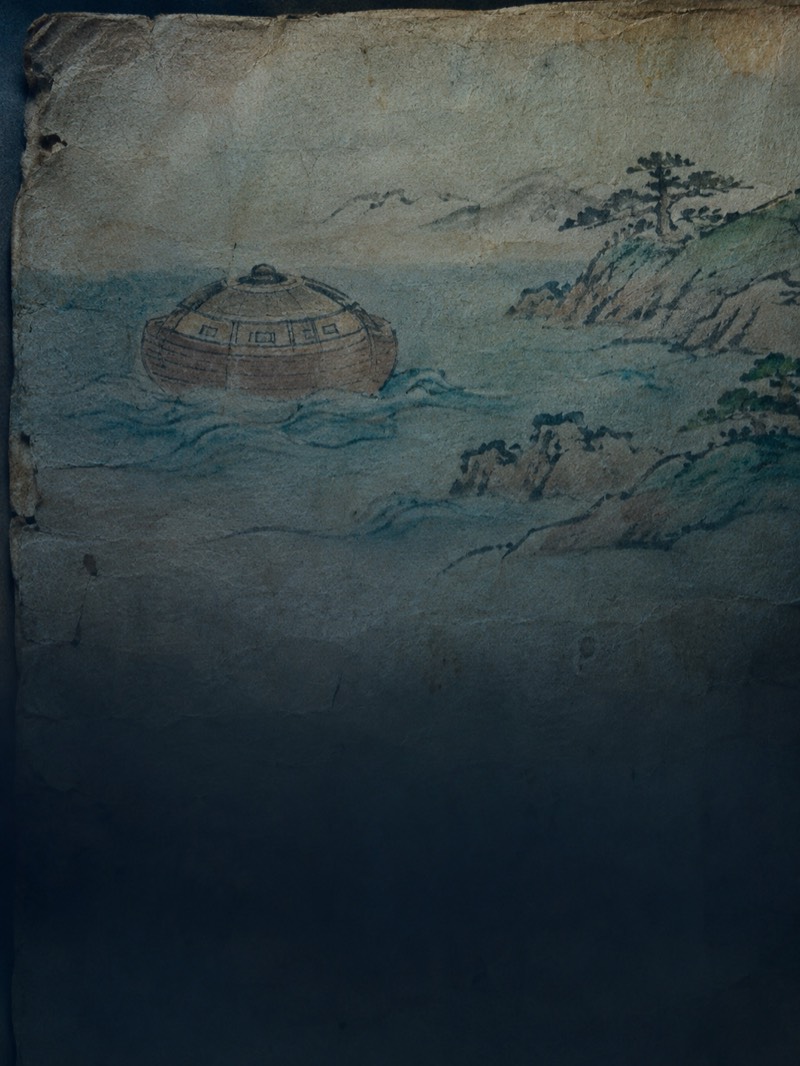
The Edo-Period Utsuro-bune Legend
The 1803 castaway tale from Hitachi Province, examined through Toen Shosetsu and other old texts and recent research, with its parallels to modern UFO stories.
Where Shikoku's "UFO Line" Got Its Name
Where Shikoku's "UFO Line" ridge road runs, and how its name, once the "Yuho Line," connects to stories of mistaken photos, on the facts.
Culture

Terms & Basics
UFO vs. UAP: what's the difference?
The difference between UFO (unidentified flying object) and UAP (unidentified anomalous phenomena), why "unidentified" is not the same as "extraterrestrial," and how the terms have changed.
UFO/UAP glossary
From the difference between UFO and UAP and the A–F classification to the main investigating bodies and well-known cases. A dictionary for treating the unidentified correctly: as unidentified.
Information Literacy
Is that image real? How to spot fakes
Reverse image search, Exif, typical fake videos and cognitive bias: the basics of information literacy for checking whether images and claims are true, using UFOs as the example.
AARO's Historical Record Report Explained
The US Defense Department's AARO reviewed government records since 1945 and found no verifiable evidence of recovered or hidden alien technology.
Reading the Annual UAP Report Numbers
What do AARO's annual counts actually count? Using FY2023 (291) and FY2024 (757, 1,652 total) as examples, how to read the numbers without being misled.
The Truth About the Alien Autopsy Film
The 1995 Alien Autopsy film was broadcast worldwide, until those involved confessed it was shot with a dummy. How the hoax was established.
How to Spot AI-Made UFO Videos
Generative AI makes realistic UFO videos easy. Steps to check whether one is real: watermarks, visual glitches, reverse image search and tracing the source.
UFO Certification: How to Become a UFO Investigator
There is no government license or standard degree for UFO investigation. The skills an investigator needs, and a private online certification whose Grade 3 is free.
UFO and Space Research Project Ideas for Kids
How to do a UFO and space research project by observing, recording and cross-checking ordinary lights in the sky, with tips on writing it up and going further.
UFO Kanteishi Exam, Grade 3
Free, no account needed. 20 questions on observing, recording and cross-checking. Pass and get a certificate with a verifiable number.
To become a Licensed UFO Kanteishi, take Grade 2 (Official Guide + exam).