
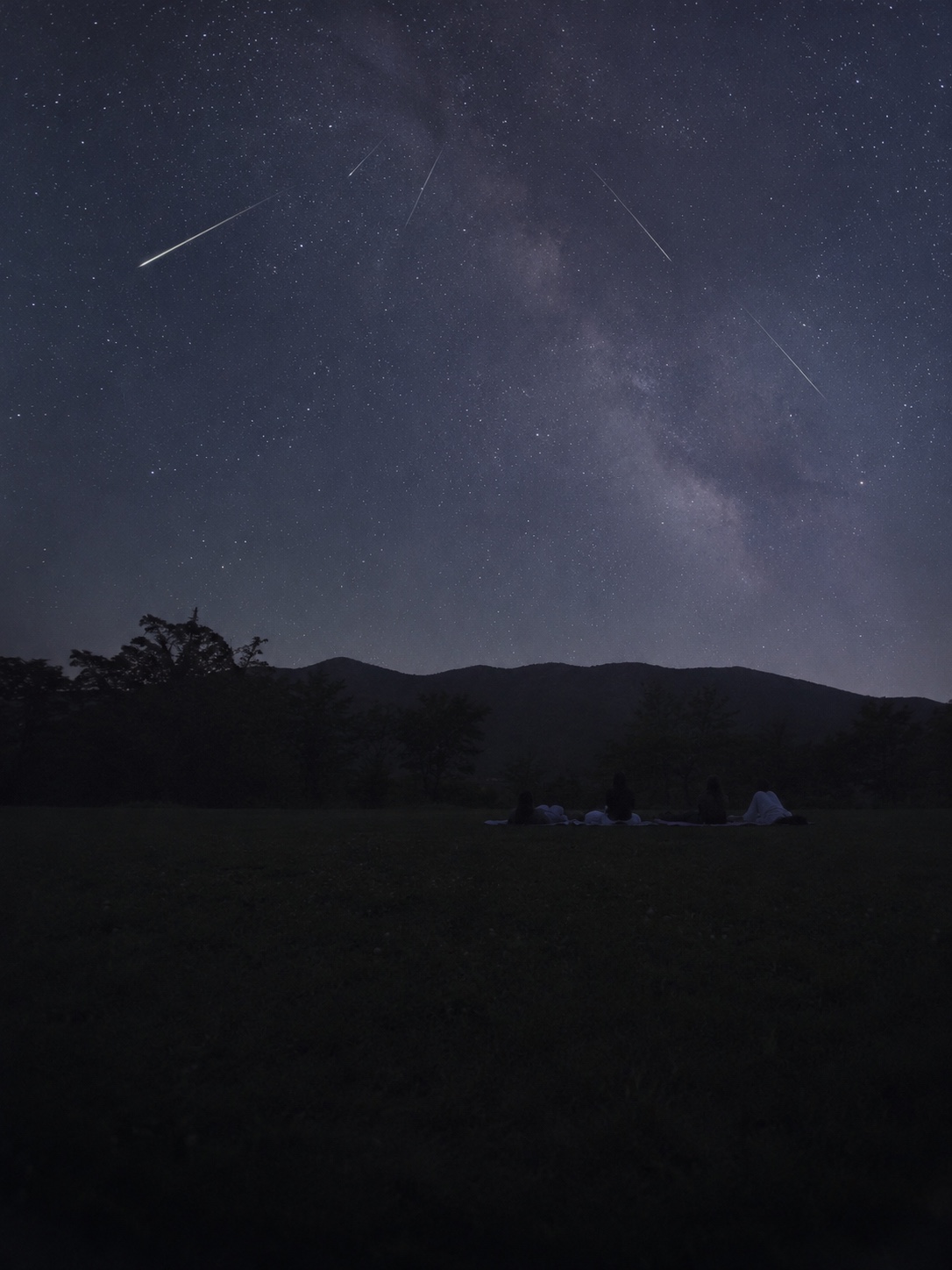
Key points
- According to NAOJ, the 2026 peak was at about 11:00 JST on August 13 (02:00 UTC). Because that was daytime in Japan, the best viewing there was the night of August 12 into the early hours of August 13, with the night of August 13 into the early hours of August 14 as the next best.
- In 2026, the new moon fell on August 13 (JST), so moonlight had almost no effect. It was a year in which the peak and the new moon nearly coincided.
- NAOJ's expected rates under a dark sky were about 35 meteors per hour around dawn on August 13 and about 30 per hour around dawn on August 14 (Japan time); actual numbers vary greatly with observing conditions.
- Meteors streak in all directions, so the basic approach is not to fix on one direction but to take in the whole sky.
- A meteor is characterized by vanishing in an instant, which looks different from aircraft or satellites moving at a constant speed, with or without blinking.
The 2026 peak was on August 13. The Perseids return at about the same time every year (mid-August), and the shower is known for bringing many meteors every summer. Based on announcements from the National Astronomical Observatory of Japan (NAOJ), this article summarizes the best times and directions for viewing in 2026. It also explains how to identify a light crossing the sky, or a meteor that flashes past, by cross-checking it against known phenomena when you wonder whether it might be a UFO. Times in this article are for Japan (JST, UTC+9) unless otherwise noted.
When was the best time to see the 2026 Perseids?
According to NAOJ, the 2026 peak (the time of greatest activity) was at about 11:00 JST on August 13 (02:00 UTC). Because the peak fell in the daytime in Japan, it was not possible to see many meteors with the naked eye at that exact moment there. The easiest times to observe were the nights closest to the peak.
- Best: the night of August 12 into the early hours of August 13 (Japan time).
- Next best: the night of August 13 into the early hours of August 14 (Japan time).
- The activity period is said to run roughly from about July 17 to about August 24, and relatively many meteors are expected on the few nights around the peak.
Why you can still observe when the peak is in the daytime
2026: a new moon made for good conditions
In meteor watching, whether there is moonlight greatly affects how many meteors you can see. In 2026, the new moon fell on August 13 (JST), and conditions were good, with almost no effect from moonlight. A year in which the peak and the new moon nearly coincide is said to come only once every few years, and under a dark sky a relatively large number of meteors could be expected.
The number you actually see varies greatly with the darkness of the sky, the weather and the observer's experience. For 2026, NAOJ expected about 35 per hour around dawn on August 13 and about 30 per hour around dawn on August 14 (Japan time) under a dark sky. Under city lights, this drops to a fraction of that or less.
Meteor counts "depend on conditions"
Choosing the direction, time and place to watch
Meteors in a shower streak outward in all directions from a single point called the radiant. So rather than looking only in one direction, the basic approach is to take in the whole sky. The constellation Perseus, where the radiant lies, climbs higher as the night goes on, so meteors are said to be easier to catch from late night toward dawn, when the radiant is high.
- 1Choose a place with as little city light as possible and a wide-open view of the sky.
- 2Don't fix on one direction; take in the whole sky, centered on the zenith (directly overhead).
- 3Wait about 10–15 minutes for your eyes to adjust to the darkness outdoors before you start observing.
- 4From late night toward dawn, the radiant is high and viewing is said to be relatively easy.
- 5Nights can be cool even in summer, so bring a jacket and a ground sheet or similar.
What to check before observing
How to tell meteors and fireballs from aircraft and satellites
A meteor (shooting star) is said to be what we see when a small particle of dust from space plunges into Earth's atmosphere and glows. The most important feature of how it looks is that it vanishes in an instant: most disappear within a fraction of a second to a few seconds. An especially bright meteor is called a fireball; it streaks across fast with a bright tail and is said to disappear within a few seconds to a dozen or so seconds. Aircraft and satellites, by contrast, take time to cross the sky, so how long the light is visible is often enough to tell them apart.
Scroll the table sideways →
| Type of light | How it moves | How long it is visible | Main clues |
|---|---|---|---|
| Shooting star (meteor) | A single streak of light flashes past | Roughly an instant to a few seconds | The time from appearance to disappearance is very short |
| Fireball (bright meteor) | Streaks across fast with a bright tail | A few seconds to a dozen or so seconds | Very bright, but disappears quickly |
| Aircraft | Moves in a steady direction while blinking | Tens of seconds to several minutes | Blinking lights such as red and green are often visible |
| Satellites and the ISS | Crosses at a constant speed without blinking | A few minutes | A single non-blinking point of light moving smoothly |
In other words, for a blinking light, or a light that keeps moving at a constant speed for tens of seconds or more, the basic approach is to suspect an aircraft or a satellite first. A light that vanishes in an instant is most likely a meteor. How the International Space Station (ISS) looks when it crosses the sky is covered in a separate article.
Keep a record (date, time, direction and elevation)
So that you can cross-check what a light was later, it helps to record it at the time you observe it. If you rely on memory alone, your impression tends to change as time passes.
What to record
- Date and time: the date you saw it and the time, as accurately as possible.
- Direction: roughly which direction (east, south, etc.) it appeared in.
- Elevation: a rough angle above the horizon (directly overhead is 90 degrees).
- How long it was visible: an instant, a few seconds, or tens of seconds or more.
- Movement and color: whether it blinked, which way it moved, whether it had a tail, and so on.
These records help not only in judging whether something was a meteor, but also in cross-checking a light that seemed unidentifiable against known phenomena later. For how to keep records, see also our article that sets out the observation steps.
How to cross-check what you saw afterward
Even a light that "moved oddly for a shooting star" usually turns out to fit a known phenomenon when you check it calmly against your records. Even if you cannot identify something on the spot, that does not mean it is extraterrestrial. The basic approach is to cross-check what you saw against known phenomena one by one, and to treat carefully only what remains unexplained at the end.
- 1Recall how long it was visible. If it was an instant to a few seconds, consider a meteor; if tens of seconds or more, consider an aircraft or a satellite.
- 2Check whether it blinked. A blinking light is more likely to be an aircraft.
- 3Using the date, time and direction you recorded, check whether the ISS or another satellite was passing at that time.
- 4If it was very bright and disappeared quickly, consider a fireball (bright meteor).
- 5Only if none of these fit should you carefully keep a record of it as an unexplained phenomenon.
"Unidentified" does not mean "extraterrestrial"
FAQ
When did the 2026 Perseids peak?+
According to the National Astronomical Observatory of Japan (NAOJ), the 2026 peak was at about 11:00 JST on August 13 (02:00 UTC). Because that was daytime in Japan, the best naked-eye viewing there was the night of August 12 into the early hours of August 13, with the night of August 13 into the early hours of August 14 as the next best. The Perseids peak in mid-August every year, and relatively many meteors can be seen on the few nights around the peak.
Which direction should I look?+
Meteors streak in all directions from the radiant, so you don't need to limit yourself to one direction. The basic approach is to take in the whole sky. The constellation Perseus, where the radiant lies, climbs higher as the night goes on, so viewing is said to be easier from late night toward dawn, when the radiant is high.
How can I tell a shooting star from a UFO?+
The main feature of a meteor is that it vanishes within an instant to a few seconds. A light moving in a steady direction while blinking is most likely an aircraft, and a non-blinking light that crosses the sky over a few minutes is most likely a satellite or the ISS. The basic approach is to record how long it was visible, whether it blinked, its color and so on, and cross-check it against known phenomena one by one.
Can I see them from a city?+
You may see some, but city lights are said to greatly reduce the number visible. NAOJ's guideline is a few dozen per hour in a dark location (about 30–40 expected), while under city lights the number drops to a fraction of that or less. Choosing a place with a sky that is as dark and open as possible makes them easier to see.
UFO Kanteishi Exam, Grade 3
Free, no account needed. 20 questions on observing, recording and cross-checking. Pass and get a certificate with a verifiable number.
To become a Licensed UFO Kanteishi, take Grade 2 (Official Guide + exam).
Related reading
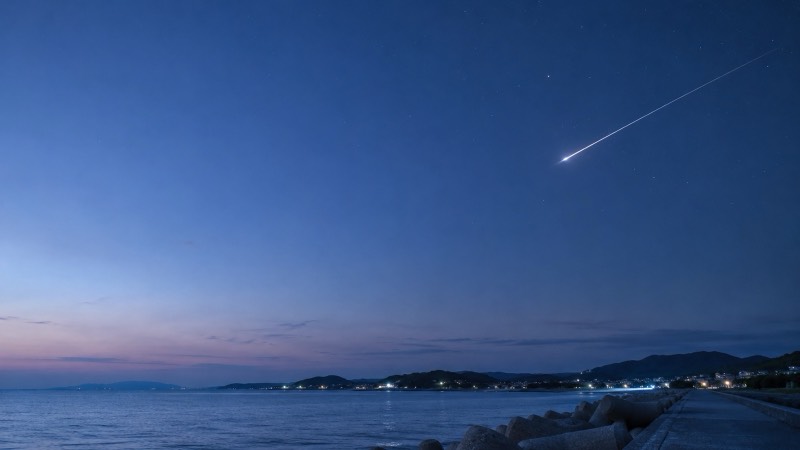
Fireballs vs. UFOs: How to Tell
Most bright balls of fire crossing the sky are fireballs (bright meteors). Breakup, glowing trains and delayed sound: what to look for to tell them from UFOs.
Read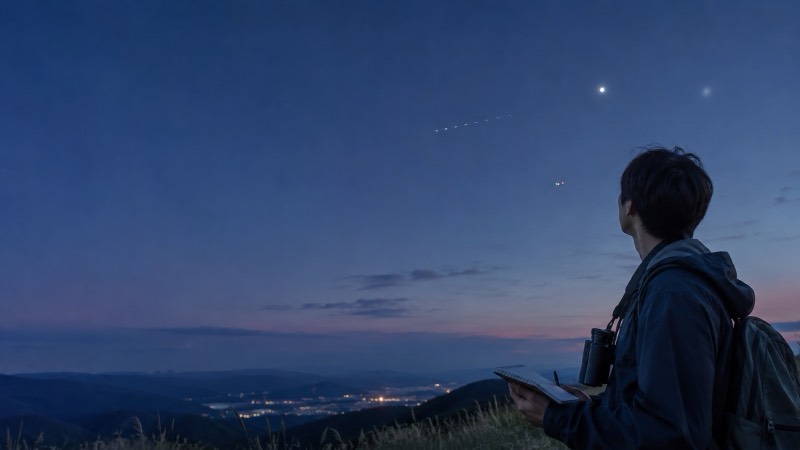
A Silent Light Crossing the Sky May Be the ISS
A silent, steady light moving straight across the night sky may be the ISS, orbiting about 400 km up every 90 minutes. How to tell it from aircraft and confirm with a forecast.
Read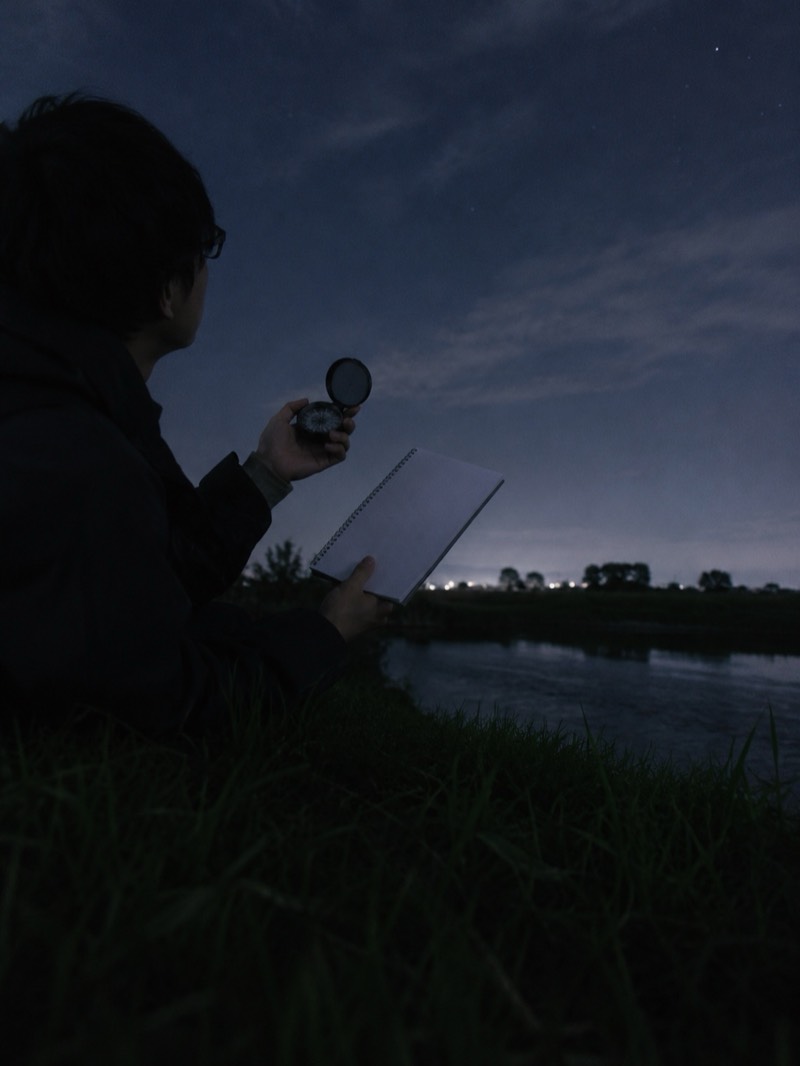
5 Things to Check About a Light in the Night Sky
Five observation points for identifying lights in the night sky. Based on NAOJ's list, a step-by-step guide and table for planets, satellites, contrails and more.
Read