
Key points
- Stars twinkle because turbulence in Earth's atmosphere bends their light by slightly different amounts from moment to moment.
- Near the horizon, starlight passes through much more air, so the twinkling is stronger and can split into flashes of red, green and blue.
- Sirius is the brightest star in the night sky, so its color flashing is especially noticeable; it is low in the sky for observers at mid-northern latitudes.
- Other bright stars, such as Capella and Arcturus, and sometimes planets very low on the horizon, can do the same.
- A light that stays in the same place against the background stars and rises and sets with them is a star, however strange it looks.
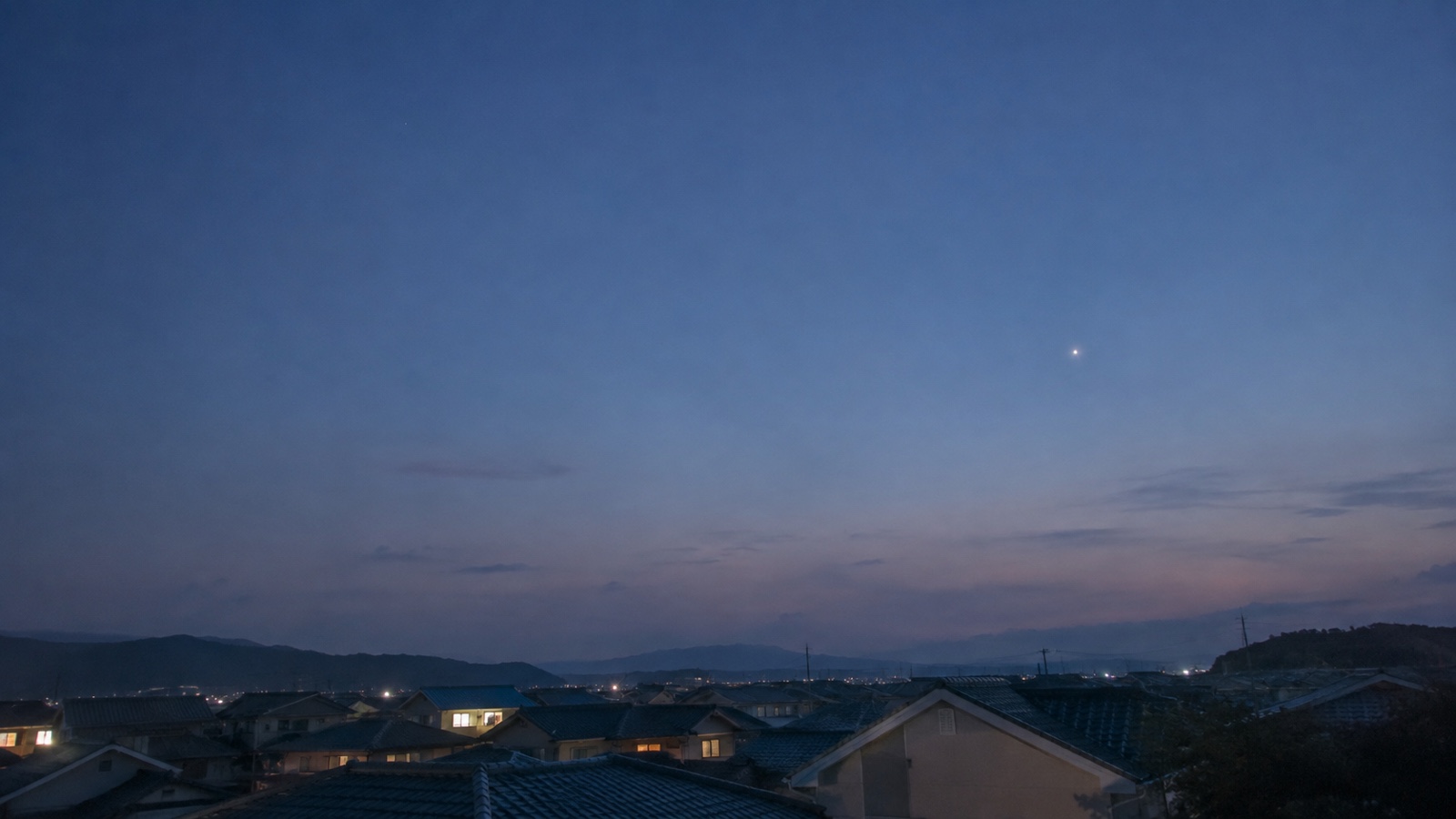
A common report goes like this: a bright light hangs low in the sky, flashing red, green and blue, and seems to hover in place for hours. Through binoculars or a phone camera it looks even stranger, pulsing and changing color. In most cases this is not an aircraft or an unknown object. It is a bright star twinkling very strongly.
Why stars twinkle and change color
Starlight reaches us as a single point. On its way through Earth's atmosphere, it passes through pockets of air at different temperatures and densities, which bend the light slightly. Because these pockets keep moving, the star's brightness and position jitter many times a second. This is twinkling, which astronomers call scintillation.
The air also bends different colors by slightly different amounts, much as a prism does. When a star is high overhead the effect is small. When it is low on the horizon, its light passes through far more air, and the colors can separate for an instant. The result is a star that seems to flash red, then green, then blue.
Why Sirius is the usual suspect
Sirius, in the constellation Canis Major, is the brightest star in the night sky. Because it is so bright, its color flashing is easy to see with the naked eye. For observers at mid-northern latitudes, including the United States, Europe and Japan, Sirius never climbs very high, so it is often seen through a thick layer of air. It is prominent in the evening sky in winter and rises in the east-southeast in late evening around November and December, a time when it sits low and twinkles strongly.
Sirius is not the only one. Capella and Arcturus, both very bright, can flash colors when they are low, and planets very close to the horizon can twinkle too, although planets usually shine more steadily.
How to check
- 1Note the direction and the time.
- 2Compare the light with a fixed object such as a rooftop or a pole. Over 10 to 15 minutes, a star moves slowly along with the other stars (rising if it is in the east, sinking if it is in the west), but it does not dart around.
- 3Open a planetarium app such as Stellarium and point it in the same direction. If it shows Sirius, Capella, Arcturus or a planet at that spot, that is your light.
- 4Check again an hour later. If the light has moved with the stars, it is a star.
Why phone videos make it look worse
FAQ
Why is a star flashing different colors?+
Turbulence in the atmosphere bends starlight by different amounts for different colors. Near the horizon, where the light passes through more air, this can make a bright star seem to flash red, green and blue.
Which star flashes red and blue?+
Most often Sirius, the brightest star in the night sky, especially when it is low on the horizon. Capella and Arcturus can also flash colors when low.
Can planets flash colors too?+
Planets usually shine more steadily than stars, but a planet very close to the horizon can also twinkle and change color.
UFO Kanteishi Exam, Grade 3
Free, no account needed. 20 questions on observing, recording and cross-checking. Pass and get a certificate with a verifiable number.
To become a Licensed UFO Kanteishi, take Grade 2 (Official Guide + exam).
Related reading
What is that bright light in the sky tonight? (live sky check)
Read
UFO Identification Chart
Steady, blinking, color-flashing, a line of lights, a hovering light: a chart that matches common sightings to their likely explanations and to tools for checking them.
Read
Satellite, Plane, Star or Planet? How to Tell
Blinking means aircraft, a steady moving point means a satellite, and a light that stays put is a star or planet. A simple way to sort night-sky lights, with tools to confirm.
Read
Why Venus Gets Mistaken for a UFO
Most very bright "stars" at dusk or dawn are Venus or Jupiter. How atmospheric turbulence and the autokinetic effect make them seem to move, and how to tell a planet.
Read
5 Things to Check About a Light in the Night Sky
Five observation points for identifying lights in the night sky. Based on NAOJ's list, a step-by-step guide and table for planets, satellites, contrails and more.
Read