
Key points
- Most lights reported as UFOs turn out to be planets, bright stars, satellites, aircraft, drones, Starlink trains or camera artifacts.
- The fastest way to narrow it down is to note four things: does it move, does it blink, how long was it visible, and what time was it.
- Free tools such as a planetarium app, Heavens-Above, NASA's Spot the Station and Flightradar24 can confirm most sightings after the fact.
- If nothing on the chart fits, that means the record is not enough to identify it yet. It does not mean the object was extraterrestrial.
You saw a light in the sky and you don't know what it was. Before anything else, it helps to know that a small number of everyday sources account for most sightings: bright planets, bright stars low on the horizon, satellites, aircraft, drones and, more recently, trains of Starlink satellites. Photos add another group: lens flares and reflections that were never in the sky at all.
This chart lists the patterns people most often describe, the explanation that usually fits, and a way to check it. Start with the row that matches the most obvious feature of what you saw.
Lights that barely move
Scroll the table sideways →
| What you saw | Most likely explanation | How to check |
|---|---|---|
| A very bright, steady "star" low in the west after sunset or in the east before dawn | Venus or Jupiter | Open a planetarium app (such as Stellarium) and point it in the same direction at the same time |
| A bright star near the horizon that flashes red, green and blue | A bright star twinkling strongly, very often Sirius in winter | Check a planetarium app; through binoculars the colors keep flickering but the point does not move against nearby stars |
| A light that seems to drift or wobble when you stare at it in the dark | The autokinetic effect (a trick of the eye), usually on a star or planet | Line it up with a fixed object such as a roof edge or a pole; if it stays put against the edge, it is not moving |
| A light hovering in one spot with small red, green or white lights, sometimes buzzing | A drone | Drones usually hover low and change direction sharply; check whether the lights blink in a regular pattern |
Lights that move across the sky
Scroll the table sideways →
| What you saw | Most likely explanation | How to check |
|---|---|---|
| A steady, non-blinking point moving smoothly, visible for a few minutes, that may fade out in mid-sky | A satellite; if it is brighter than any star, the International Space Station (ISS) | Look up passes for your location on Heavens-Above or NASA's Spot the Station |
| A straight line of evenly spaced lights moving together | A train of Starlink satellites, usually within days or weeks of a launch | Check a Starlink pass-prediction site such as Find Starlink for your location and time |
| Blinking red, green or white lights, sometimes with engine noise | An aircraft | Check Flightradar24 or a similar flight-tracking site for the time and direction |
| Orange glowing lights drifting slowly upward and going out one by one | Sky lanterns (paper lanterns with a small flame) | They drift with the wind; check whether there was a festival, wedding or celebration nearby |
| A fast streak that lasts a second or less | A meteor; a very bright one is a fireball | Check meteor-shower dates and fireball reports from meteor organizations |
| A slow cluster of glowing pieces with trails, breaking apart over tens of seconds | A rocket stage or space debris re-entering the atmosphere | Search the date for re-entry predictions and news reports; many people usually see the same event |
Shapes, beams and clouds
Scroll the table sideways →
| What you saw | Most likely explanation | How to check |
|---|---|---|
| A glowing spiral or jellyfish-like cloud at dusk or dawn | The exhaust plume of a rocket launch, lit by the sun from high altitude | Check launch schedules for that evening or morning |
| Tall vertical columns of light on a very cold night | Light pillars: ground lights reflected by ice crystals in the air | Look for streetlights or stadium lights below the columns |
| A smooth, saucer-shaped cloud that stays in one place near mountains | A lenticular cloud | It keeps its shape for a long time even in wind; compare with weather reports for mountain waves |
| Moving circles or beams of light on low clouds | Searchlights or advertising lights | Look for a venue or event nearby; the circles move in repeating patterns |
| A thin green beam pointing straight up | A laser, often an atmospheric research lidar or a laser pointer | Note the location; research lidars are fixed and operate on a schedule |
Things that only appear in photos
Scroll the table sideways →
| What you saw | Most likely explanation | How to check |
|---|---|---|
| A round or hexagonal spot that you did not see with your eyes | A lens flare or lens ghost from a bright light in or near the frame | Lens ghosts usually sit on the opposite side of the frame's center from the light source |
| Round, semi-transparent "orbs" in a flash photo | Dust, pollen, raindrops or insects close to the lens, lit by the flash | Take another shot without the flash; the orbs usually disappear |
| A dark object that shot through the frame too fast to see | An insect or bird close to the camera | Check frame by frame; nearby insects appear blurred and cross the frame in a few frames |
Four things to write down
If nothing on the chart fits
Some sightings cannot be matched to a known cause, usually because the record is too thin: no time, no direction, or a short, blurry video. That leaves the sighting unidentified, which simply means it has not been identified. It is not evidence for any particular explanation, including an extraterrestrial one. US government reports on UAP have likewise noted that many unresolved cases lack enough data to analyze.
FAQ
What is the most common thing mistaken for a UFO?+
Bright planets, especially Venus, are among the most common, along with bright stars low on the horizon, satellites, aircraft and, in recent years, Starlink satellite trains and drones.
How can I tell a satellite from a plane at night?+
A satellite is a steady point of light that does not blink and moves smoothly and silently; it may fade out in mid-sky as it enters Earth's shadow. Aircraft have blinking red, green or white lights.
Is there an app that tells me what I am looking at?+
A planetarium app such as Stellarium identifies stars and planets; Heavens-Above and NASA's Spot the Station show satellite and ISS passes; Flightradar24 shows aircraft.
UFO Kanteishi Exam, Grade 3
Free, no account needed. 20 questions on observing, recording and cross-checking. Pass and get a certificate with a verifiable number.
To become a Licensed UFO Kanteishi, take Grade 2 (Official Guide + exam).
Related reading
What is that bright light in the sky tonight? (live sky check)
Read
5 Things to Check About a Light in the Night Sky
Five observation points for identifying lights in the night sky. Based on NAOJ's list, a step-by-step guide and table for planets, satellites, contrails and more.
Read
Satellite, Plane, Star or Planet? How to Tell
Blinking means aircraft, a steady moving point means a satellite, and a light that stays put is a star or planet. A simple way to sort night-sky lights, with tools to confirm.
Read
Why a Star Flashes Red, Green and Blue
A bright "star" near the horizon that flashes colors and seems to hover is usually Sirius or another bright star twinkling strongly. Why it happens and how to confirm it.
Read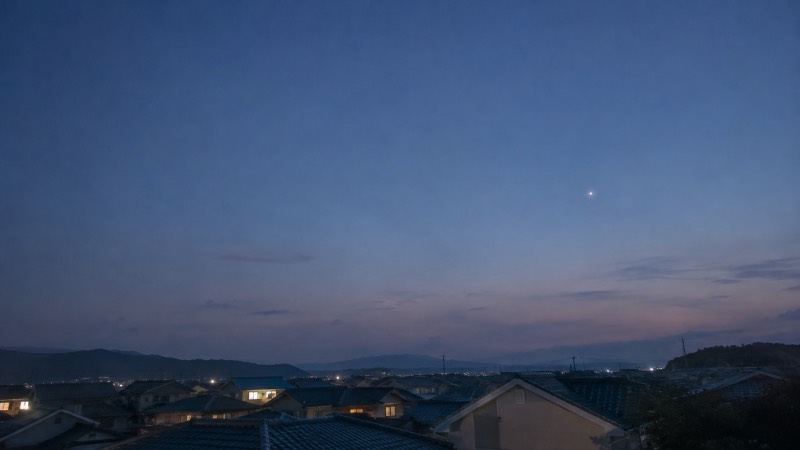
Why Venus Gets Mistaken for a UFO
Most very bright "stars" at dusk or dawn are Venus or Jupiter. How atmospheric turbulence and the autokinetic effect make them seem to move, and how to tell a planet.
Read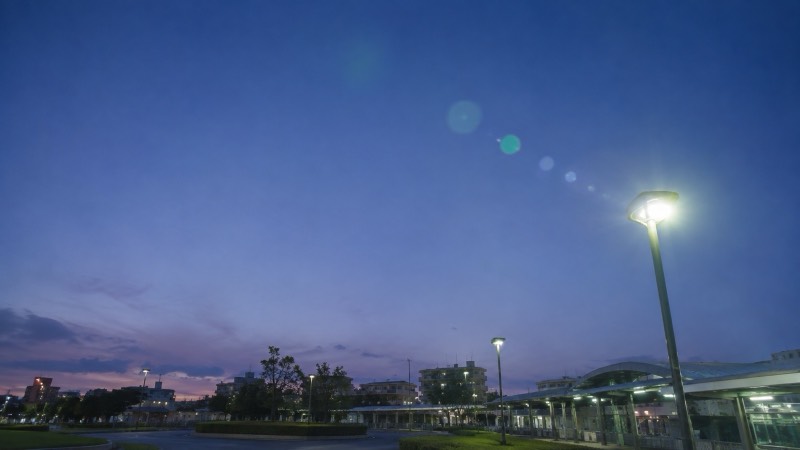
What Orbs in Photos Really Are
How to identify round "orbs" in photos, based on known phenomena: lens flare, lens ghosts, out-of-focus blur and ball lightning.
Read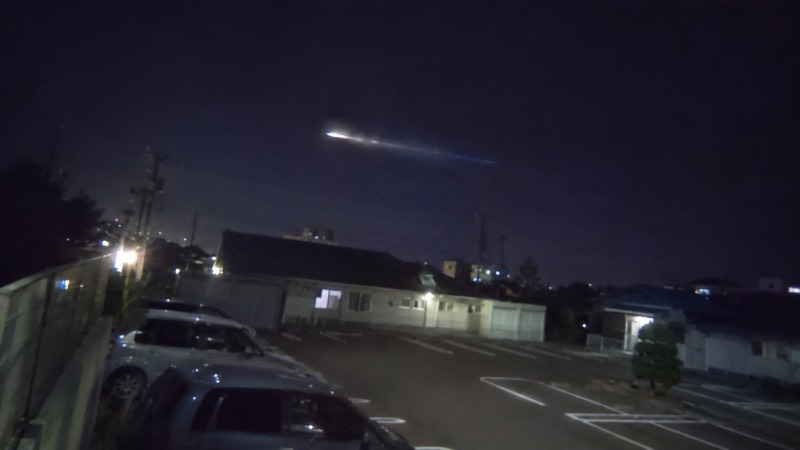
Rocket Reentries vs. UFOs: How to Tell
A fireball that drifts slowly for tens of seconds while breaking apart may be rocket debris or a satellite reentering. How it differs from a meteor, with reported cases.
Read