
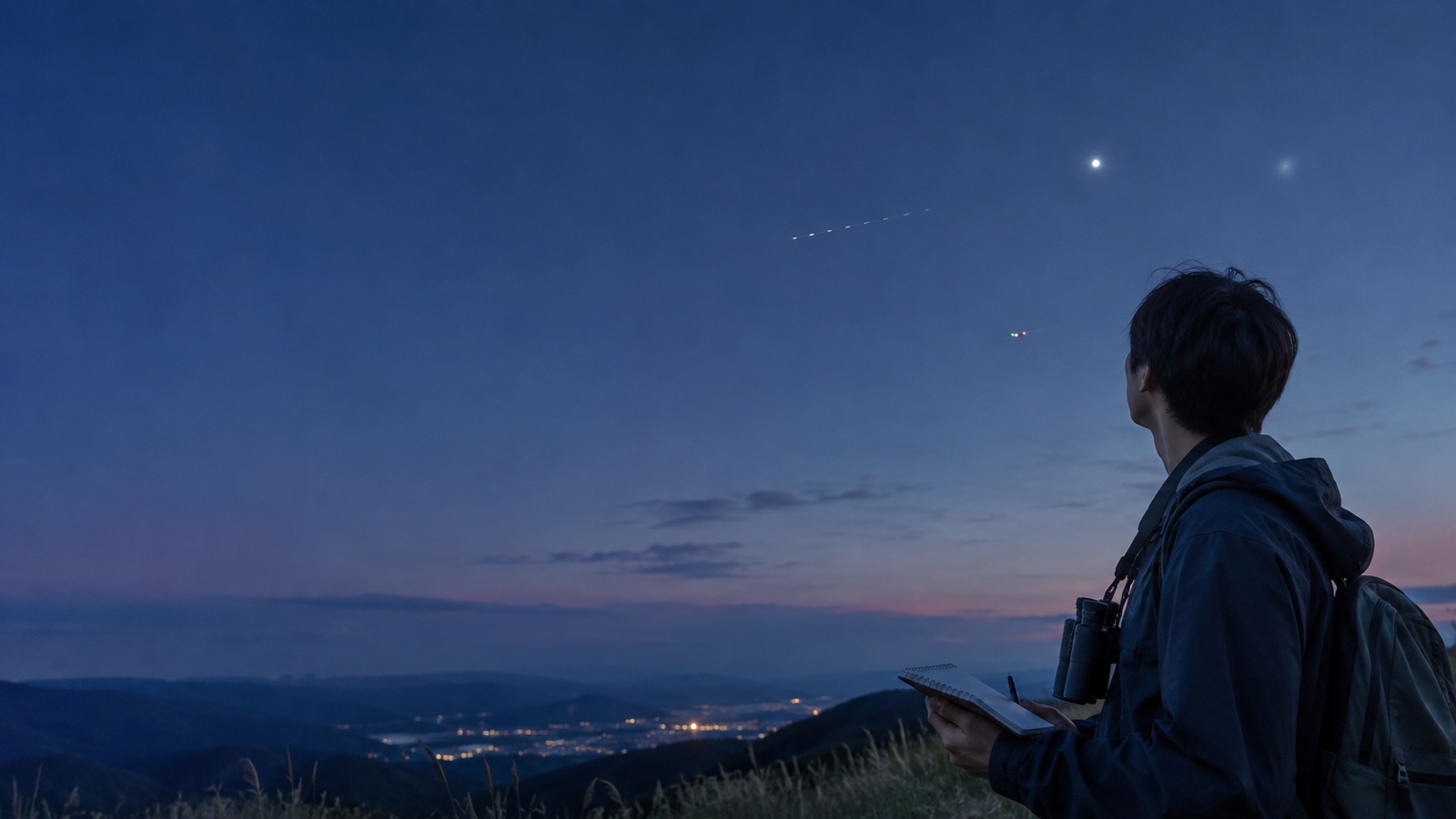
Key points
- Aircraft have blinking lights; satellites do not blink.
- Satellites move smoothly and silently and cross the sky in a few minutes; some fade out in mid-sky as they enter Earth's shadow.
- Stars and planets stay fixed relative to each other and move only slowly westward as Earth turns.
- Planets usually shine with a steadier light than stars; a star low on the horizon can twinkle strongly and even change color.
- The International Space Station is the brightest satellite, brighter than any star.
Most lights in the night sky fall into four groups: aircraft, satellites, stars and planets. Telling them apart doesn't need special equipment. Three questions are enough in most cases: does the light move, does it blink, and how long is it visible?
Step 1: Does it move?
Compare the light with a fixed object such as a rooftop, a tree or a utility pole. If it stays in the same place for a minute or more, it is almost certainly a star or a planet. Stars and planets do move, but slowly: the whole sky turns westward at about 15 degrees per hour, so the change is hard to notice over a minute or two.
Be careful when you stare at a single light in a dark sky with nothing nearby to compare it to. The eye's own small movements can make a fixed point seem to drift or wobble. This is called the autokinetic effect, and it is one reason stationary stars get reported as moving objects.
Step 2: Does it blink?
Aircraft carry navigation lights: red on the left wingtip, green on the right, and white strobes or a red beacon that flash at regular intervals. If a moving light blinks on and off in a steady rhythm, it is almost always an aircraft. You may also hear engine noise if it is low enough.
Satellites have no lights of their own. You see them because they reflect sunlight, so they shine with a steady light. Some tumbling satellites and rocket bodies brighten and dim slowly as they turn, but this looks different from the sharp, regular flash of aircraft strobes.
Step 3: How long is it visible, and when?
Scroll the table sideways →
| Object | How it looks | How long | When |
|---|---|---|---|
| Aircraft | Blinking colored lights, often with sound | Several minutes; follows a straight path at a steady speed | Any time of night |
| Satellite | Steady point moving smoothly, silent | A few minutes from horizon to horizon; may fade out mid-sky | Mostly within a few hours after sunset or before sunrise, when the satellite is in sunlight but the ground is dark |
| ISS | Very bright steady point, brighter than any star | Up to several minutes | Same as other satellites; NASA publishes pass times |
| Star | Fixed point; twinkles, especially near the horizon | All night, slowly moving west | Depends on the season |
| Planet | Fixed point, usually steadier than stars | Hours | Venus only in the evening or morning sky; others depend on the date |
| Meteor | Fast streak | Usually a second or less | Any time; more during meteor showers |
Why satellites vanish in mid-sky
Star or planet?
Stars are so far away that they appear as points, and turbulence in the air makes them twinkle. Planets appear as tiny disks, so their light averages out and usually looks steadier. Planets also stay near the ecliptic, the line the Sun and Moon follow across the sky.
Venus is the brightest planet and appears only in the western sky after sunset or the eastern sky before sunrise. Jupiter is also very bright and can be seen for much of the night when it is well placed. A star low on the horizon can twinkle so strongly that it flashes red, green and blue; Sirius, the brightest star in the night sky, is the classic example.
Free tools to confirm what you saw
- Stars and planets: a planetarium app such as Stellarium shows what is in any direction at any time.
- Satellites: Heavens-Above lists visible passes for your location, including the ISS and bright satellites.
- The ISS: NASA's Spot the Station gives pass times and can send alerts.
- Starlink trains: Find Starlink and similar sites predict when recently launched Starlink satellites will pass over.
- Aircraft: Flightradar24 and similar flight trackers show aircraft positions, including past flights on some plans.
FAQ
Do satellites blink?+
Satellites have no lights of their own and usually shine with a steady light. Some tumbling satellites or rocket bodies brighten and dim slowly as they rotate, but they do not flash in a regular rhythm like aircraft strobes.
Why did a moving light suddenly disappear?+
It was most likely a satellite entering Earth's shadow. Satellites are visible only while sunlight reaches them, so they fade out within seconds when they pass into the shadow.
How can I tell if a bright light is a planet?+
Planets usually shine with a steadier light than stars, stay near the path of the Sun and Moon, and stay in the same place relative to the stars over a night. A planetarium app will confirm it.
UFO Kanteishi Exam, Grade 3
Free, no account needed. 20 questions on observing, recording and cross-checking. Pass and get a certificate with a verifiable number.
To become a Licensed UFO Kanteishi, take Grade 2 (Official Guide + exam).
Related reading
What is that bright light in the sky tonight? (live sky check)
Read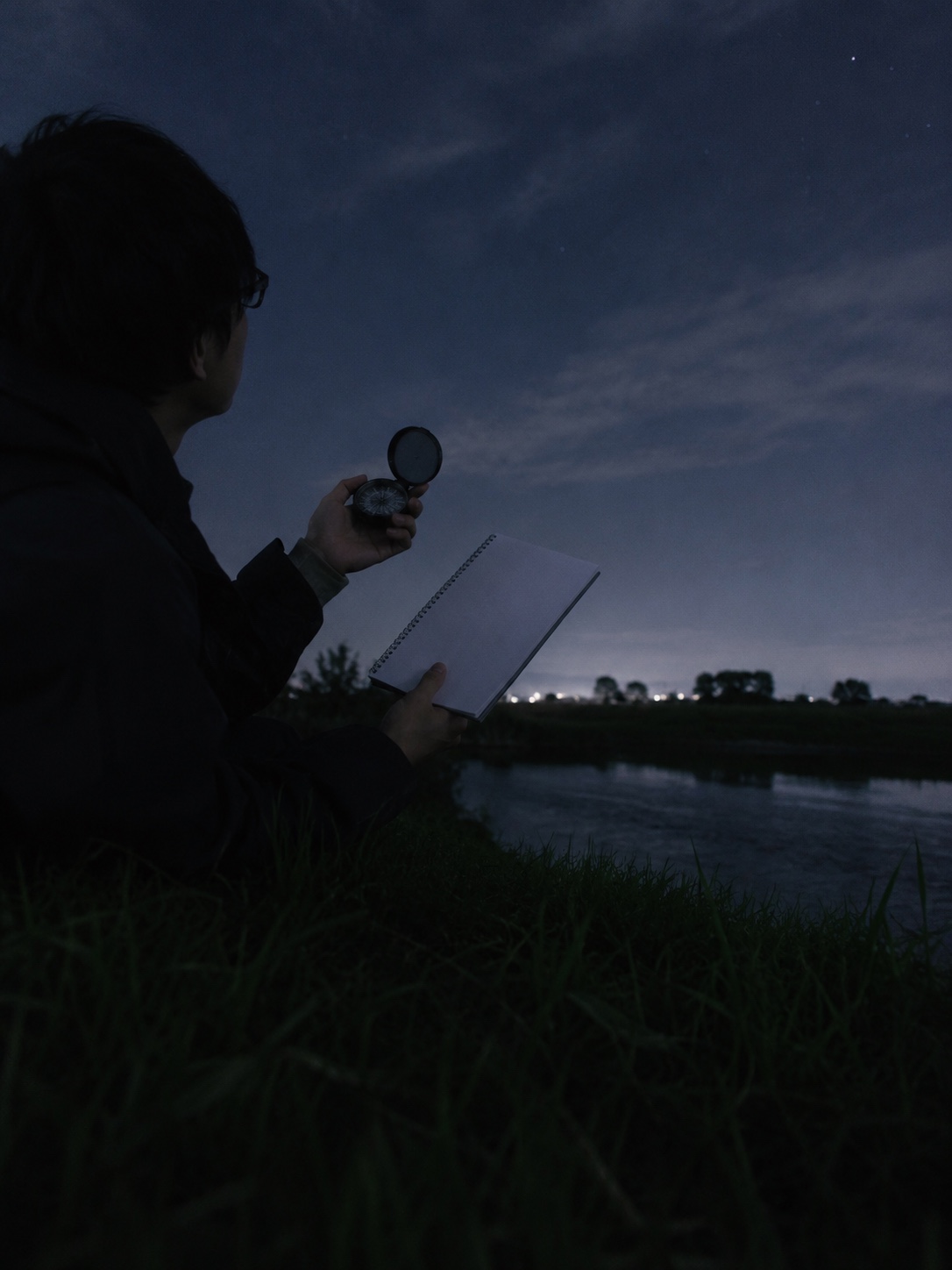
UFO Identification Chart
Steady, blinking, color-flashing, a line of lights, a hovering light: a chart that matches common sightings to their likely explanations and to tools for checking them.
Read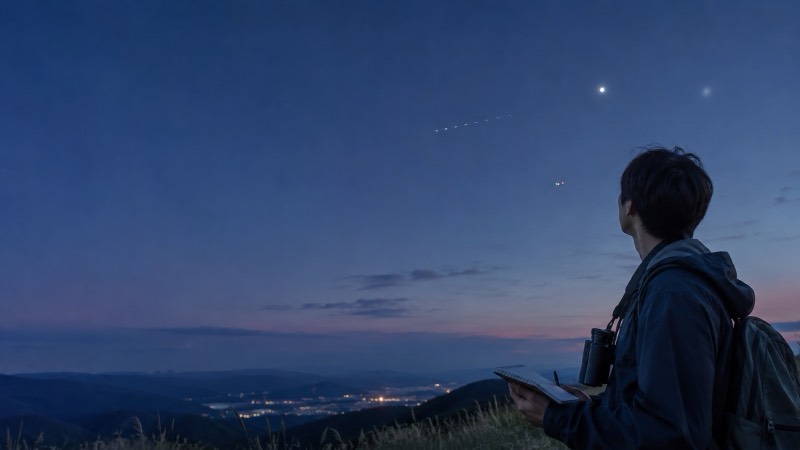
A Silent Light Crossing the Sky May Be the ISS
A silent, steady light moving straight across the night sky may be the ISS, orbiting about 400 km up every 90 minutes. How to tell it from aircraft and confirm with a forecast.
Read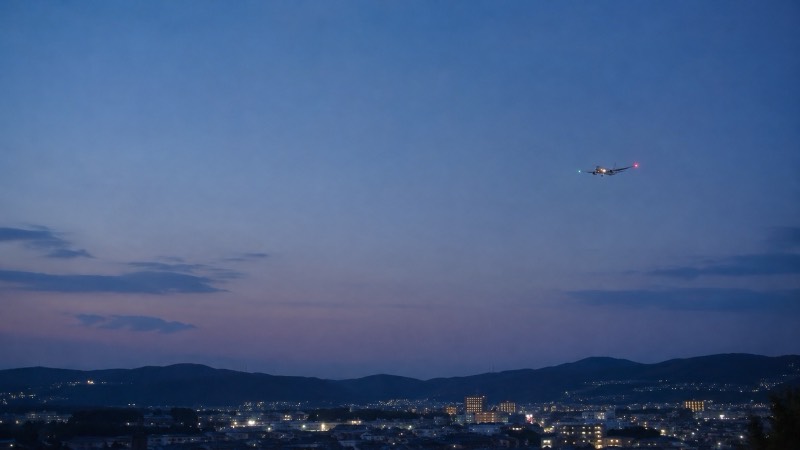
Identifying Planes Overhead with Flightradar24
How to check the flight, aircraft type and altitude of a plane overhead on Flightradar24, and how to recognize aircraft by their red, green and white lights.
Read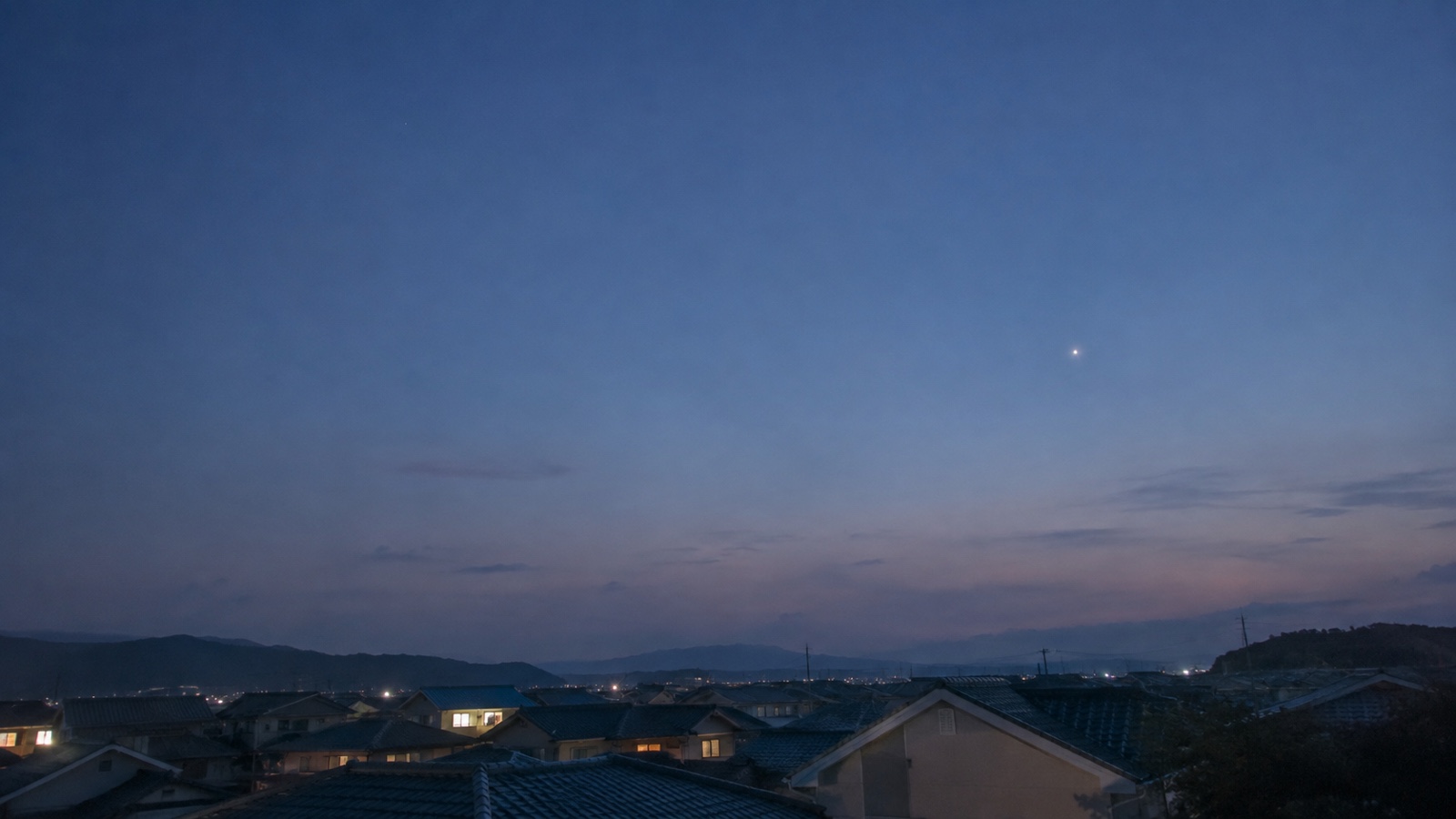
Why a Star Flashes Red, Green and Blue
A bright "star" near the horizon that flashes colors and seems to hover is usually Sirius or another bright star twinkling strongly. Why it happens and how to confirm it.
Read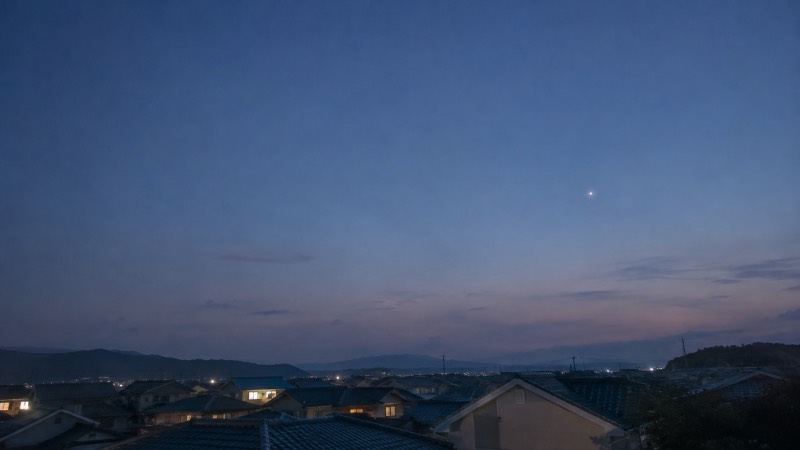
Why Venus Gets Mistaken for a UFO
Most very bright "stars" at dusk or dawn are Venus or Jupiter. How atmospheric turbulence and the autokinetic effect make them seem to move, and how to tell a planet.
Read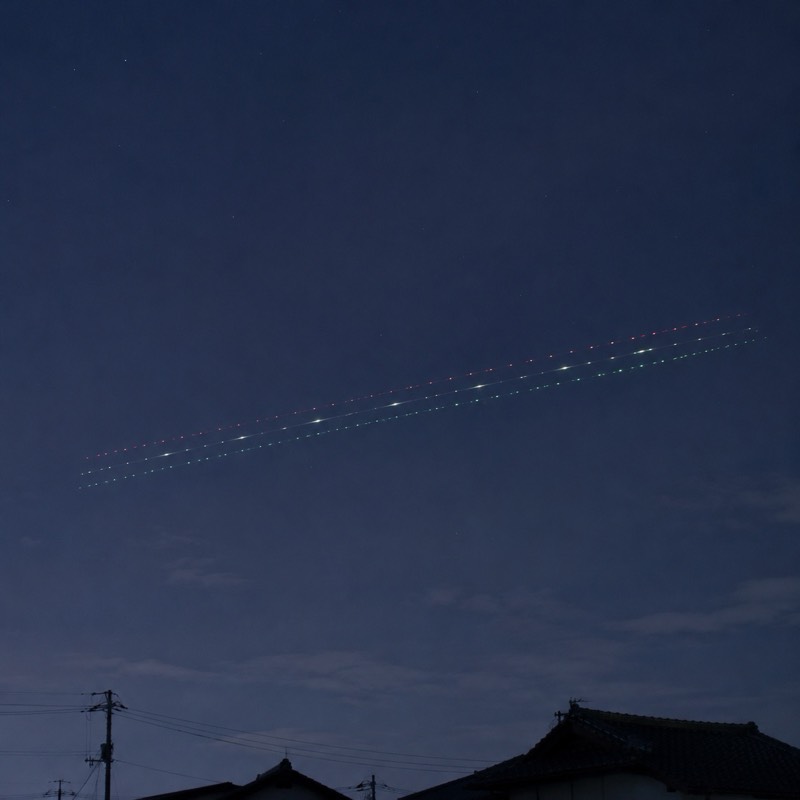
Drone or Aircraft? Telling Night Lights Apart
Use Japan's night-flight rules for drones, the colors and positions of aircraft navigation and anti-collision lights, and movement to identify a light in the night sky.
Read