
Key points
- Cosmo Isle Hakui is a space science museum in Hakui, Ishikawa Prefecture, Japan. It opened in July 1996.
- It displays real space hardware, or identical or backup units, such as a Soviet Vostok-type reentry capsule and items related to the Apollo and Luna programs.
- Behind Hakui's UFO-themed town revitalization is a local legend of a flying object called "Sohachibon."
- The exhibits are easier to understand if you separate "space hardware with a documented history" from "UFO materials whose nature has not been confirmed."
- "Unidentified" describes a state of not being identified. It does not mean extraterrestrial.
Cosmo Isle Hakui, in Hakui, Ishikawa Prefecture, on the Sea of Japan coast, is a space science museum that opened in July 1996. It is known for displaying real space hardware, or identical or backup units, obtained from the United States and Russia (the former Soviet Union), and for also covering UFO materials as part of the town's "revitalization through UFOs" theme.
This article uses official information from Hakui City and the museum to set out what kind of facility Cosmo Isle Hakui is, why Hakui chose UFOs as a theme for revitalizing the town, and how "real space hardware" and "UFO materials" are displayed as separate things.
What is Cosmo Isle Hakui?
Cosmo Isle Hakui is a city-run space science museum in the Tsurutamachi area of Hakui. It opened in July 1996. The name "Cosmo Isle" is said to mean "the Dejima of space," after Dejima in Nagasaki, the small island that served as Japan's window for contact with the outside world during the Edo period (1603–1868).
Besides exhibition rooms of space hardware, the building has the Cosmo Theater (a planetarium) that shows films on a dome screen. A major feature is its large collection of real space hardware, and some of the craft are said to be on loan from NASA and others.
Basic information (from the official website and tourist information)
The heart of the exhibits: "real" space hardware
At the core of Cosmo Isle Hakui's exhibits are pieces of hardware used in actual space programs, and craft built as identical or backup units. Having hardware from both the American and Russian (Soviet) sides is unusual in Japan.
Representative exhibits include a Soviet "Vostok-type reentry capsule," a "Mercury space capsule" from the early US crewed program, craft related to the Apollo program, a lander from the lunar probe Luna 24 (said to be a backup unit), and a rocket (Mercury-Redstone). A "moon rock" brought back by Apollo 17 and meteorites are also said to be on display.
| Exhibit | Origin / type |
|---|---|
| Vostok-type reentry capsule | Said to be a reentry capsule connected with Soviet crewed spacecraft. Accounts of its exact provenance differ between sources |
| Mercury space capsule | Spacecraft from the early US crewed space program |
| Apollo program craft | Craft and related materials connected with the Apollo program |
| Luna 24 lunar lander | Related to the Soviet uncrewed lunar exploration program. Said to be a backup unit |
| Moon rock / meteorites | A moon rock brought back by Apollo 17, meteorites and more |
How to read "real"
Why a "UFO town"? The Sohachibon legend
Behind Hakui's choice of UFOs as a theme is a local legend called "Sohachibon." The word originally referred to a Buddhist ritual instrument shaped like cymbals, and the legend is of a light (a disc-shaped object) flying through the sky, named after that shape.
Folklore is said to tell of objects seen flying at night while giving off light around Mount Bijo (Bijozan) in the north of the city. Local old documents (such as the Keta Ko-engi, an old chronicle) are also said to contain descriptions of objects flying freely through the sky. From the late 1980s into the 1990s, people looking for a theme for revitalizing the town took up this legend, and efforts to become a "UFO town" got under way in earnest, it is said.
A legend does not mean "UFO = spaceship"
What makes Hakui interesting, then, is that it places two very different things side by side as themes of the same town: "real hardware from space programs" and "UFOs as culture and legend."
Viewing "real space hardware" and "UFO materials" separately
Cosmo Isle Hakui's exhibits present, in effect, two layers: verified results of space programs (real hardware and identical or backup units) and sighting stories and culture that have been handed down while remaining unidentified (UFO materials). The two tend to blur together, but they are completely different in nature.
Space hardware is something whose history you can trace through records: when it was built, for which program and for what purpose. UFO (unidentified flying object), and UAP (unidentified anomalous phenomena), the term used in recent years, describe a state of "not yet identified." They do not mean "extraterrestrial craft."
- Space hardware: records of its manufacture, operation and flight (or history as a backup unit) survive, so its origin can be traced
- Moon rock and meteorites: how they were collected and their history are recorded
- UFO materials: mainly eyewitness accounts and legends; their nature has not been confirmed
- Sohachibon: a legend based on local old documents; interpretations vary
Unidentified means "we don't know"
When you visit Hakui, read each exhibit panel with these questions in mind: "Is this the real thing?", "Is this a backup or identical unit?", "Is this a legend?" You will enjoy both the history of space exploration and UFO culture more accurately. The same attitude helps when you think about a light you saw in the sky.
Summary: look, separate, check
Cosmo Isle Hakui is a museum where you can see real space hardware up close, and also a facility that has used UFOs as a theme for revitalizing the town, starting from the local Sohachibon legend. The key to enjoying it is to view space hardware with a documented history separately from UFO materials whose nature has not been confirmed.
"Unidentified" does not mean "extraterrestrial"; it means "not yet known." You can learn this basic of identification step by step in Grade 3 of the UFO Kanteishi (certified UFO analyst) Exam, which is free and needs no sign-up. It is also practice for calmly checking a light you saw in the sky.
FAQ
Where is Cosmo Isle Hakui?+
It is at 25 Menden, Tsurutamachi, Hakui, Ishikawa Prefecture, Japan, about a 10-minute walk from Hakui Station on the JR Nanao Line. Opening hours, closing days and fees may change, so check the official website before visiting.
When did it open?+
It is a space science museum that opened in July 1996. Its exhibits center on real US and Russian (Soviet) space hardware, as well as identical and backup units.
Are the spacecraft on display real?+
Real hardware and identical or backup units are on display, including a Vostok-type reentry capsule, a Mercury space capsule, and craft related to the Apollo and Luna programs. Whether a craft actually flew or is a backup or identical unit differs by exhibit, so reading the labels carefully gives a more accurate understanding.
Why does Hakui use UFOs to revitalize the town?+
A legend of a flying object called "Sohachibon" is said to survive in old documents and elsewhere in the city, and efforts to become a "UFO town" based on it reportedly developed from the late 1980s. Treating the legend as evidence of an extraterrestrial craft, however, requires careful examination.
Does "unidentified" mean "an alien craft"?+
No. "Unidentified" describes something whose identity has not yet been confirmed, and it does not mean extraterrestrial. Many sightings are later explained as aircraft, satellites, celestial objects and so on.
UFO Kanteishi Exam, Grade 3
Free, no account needed. 20 questions on observing, recording and cross-checking. Pass and get a certificate with a verifiable number.
To become a Licensed UFO Kanteishi, take Grade 2 (Official Guide + exam).
Related reading
Fukushima's "UFO Village" at Mount Sengamori
Japan's "UFO Village" in Fukushima: Mount Sengamori, the UFO Fureai-kan museum and the UFO Research Institute's rating system, on the facts.
Read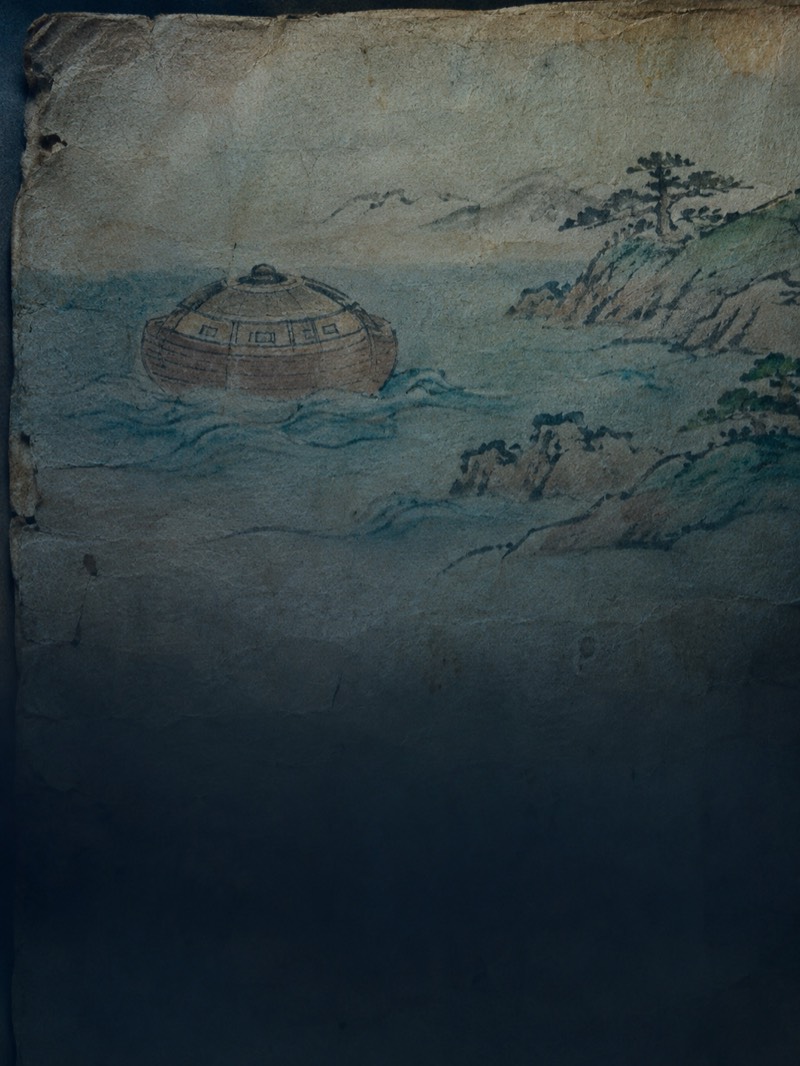
The Edo-Period Utsuro-bune Legend
The 1803 castaway tale from Hitachi Province, examined through Toen Shosetsu and other old texts and recent research, with its parallels to modern UFO stories.
ReadUFO vs. UAP: the difference
ReadHow to evaluate UFO information
Read
Where Shikoku's "UFO Line" Got Its Name
Where Shikoku's "UFO Line" ridge road runs, and how its name, once the "Yuho Line," connects to stories of mistaken photos, on the facts.
Read