
Key points
- Under Japan's Civil Aeronautics Act, unmanned aircraft (drones) may in principle fly only between sunrise and sunset; flying at night requires approval from the Minister of Land, Infrastructure, Transport and Tourism.
- Under the review criteria, a drone approved for night flight must carry lights that let its orientation be seen accurately (unless the flight area is sufficiently lit, for example by floodlights).
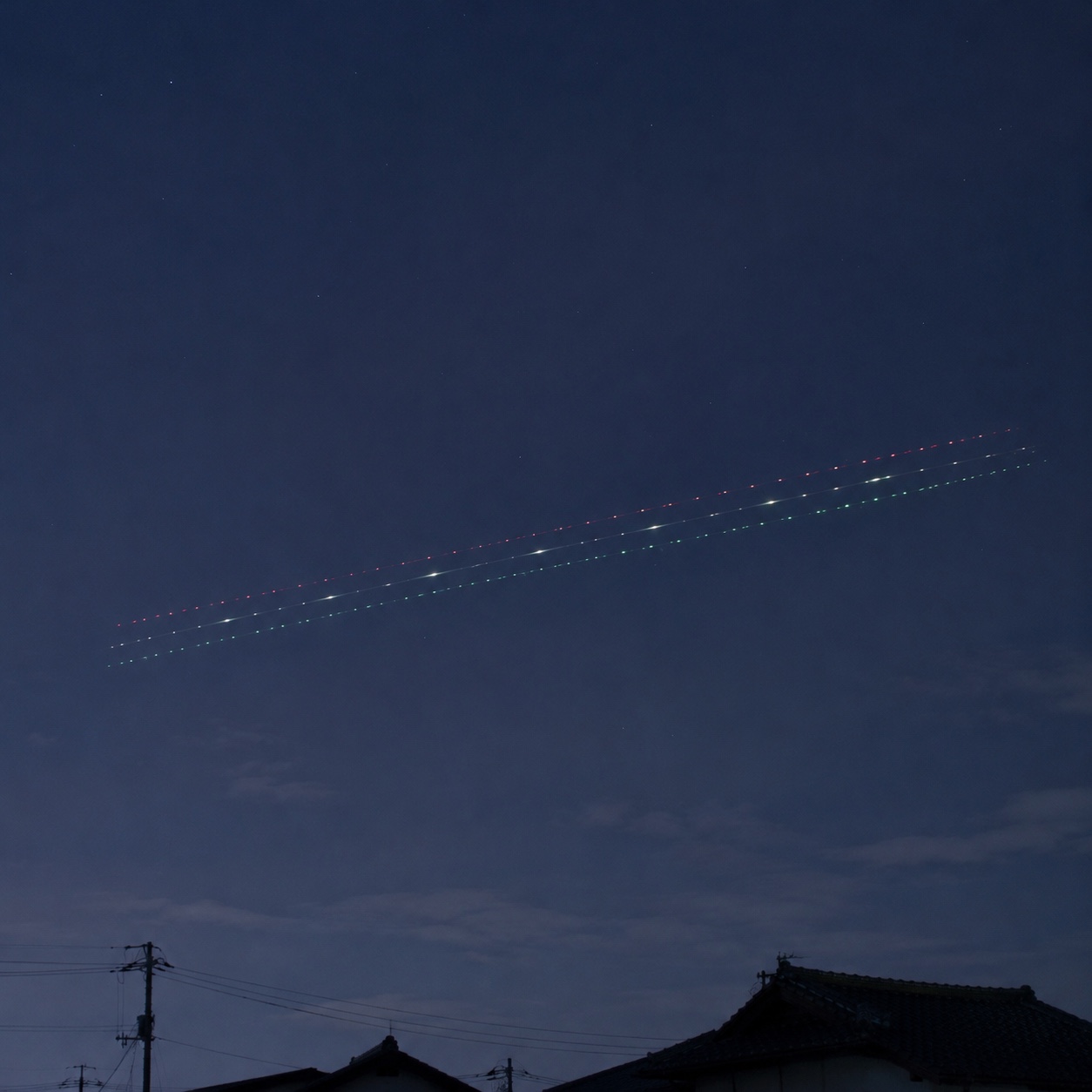
- Aircraft carry navigation lights whose positions and colors are set by the Civil Aeronautics Act (red on the left wing, green on the right wing, white on the tail) and flashing anti-collision lights. These are major clues for identification.
- Hovering, sudden stops and irregular movement at low altitude are typical of small unmanned aircraft and differ from the way an airplane flies straight at a nearly constant speed.
- Only if a light remains unexplained after you check its color, blinking and movement in order should it be treated as "unidentified." That does not mean extraterrestrial from the start.
When you see a light hanging in the night sky, you may wonder whether it is a drone, an airplane or something unknown. In fact, in Japan both drones flying at night and aircraft are subject to legal rules about their lights. Knowing these rules lets you tell the lights apart with fairly good accuracy.
Using the night-flight rules for drones set by Japan's Ministry of Land, Infrastructure, Transport and Tourism (MLIT) and the regulations on aircraft lights as clues, this article explains how to check lights at night calmly. (Other countries have their own rules.)
Drones are generally not allowed to fly at night
Under Japan's Civil Aeronautics Act, unmanned aircraft (drones) may in principle fly only between sunrise and sunset. To fly at night, you must obtain approval from the Minister of Land, Infrastructure, Transport and Tourism in advance. In other words, a drone flying at night is either flying with approval or flying in violation of the rules.
Flying at night without approval is subject to penalties under the Civil Aeronautics Act, with a fine of up to 500,000 yen. Keep in mind the premise that a drone at night is not "something anyone can fly freely."
What counts as "night"
Lights required on drones at night
Drones approved for night flight must meet additional safety criteria, one of which concerns lights. MLIT's review criteria require the drone to carry lights that let its direction (orientation) be seen accurately. However, this does not apply if the flight area is sufficiently lit, for example by floodlights.
The purpose is to let the operator see the front, back and orientation of the drone even in the dark. That is why drones at night often have lights on that show their orientation, and they may be seen moving slowly near the ground or staying in one place.
- It carries lights that show its orientation (a requirement under the review criteria)
- It often moves slowly at a relatively low altitude
- It may move in ways airplanes don't, such as staying in place (hovering), stopping suddenly or changing direction
- If you are close enough to hear the propellers, there may be an intermittent motor sound
Aircraft lights have set colors and positions
Crewed aircraft, on the other hand, carry lights whose positions and colors are set by the Civil Aeronautics Act. The typical example is the navigation lights (position lights): the rules require a red light on the left wingtip, a green light on the right wingtip and a white light on the tail.
In addition, there are anti-collision lights to prevent collisions. These are red flashing lights mounted on the top and bottom of the fuselage and bright white strobe lights on the wingtips and elsewhere; they flash to make the aircraft's presence known. If you see a bright flashing light at a regular rhythm, it is most likely an aircraft.
Scroll the table sideways →
| Aspect | Airplane (crewed aircraft) | Drone at night |
|---|---|---|
| Light colors | Basically red on the left, green on the right, white on the tail | Lights that show orientation (vary by model) |
| Blinking | Red and white lights flash at a regular rhythm | Whether and how it blinks varies by drone |
| Movement | Flies straight at a nearly constant speed | May be irregular: hovering, sudden stops, changes of direction |
| Altitude | Often passes at high altitude | Often stays at a relatively low altitude |
| Sound | Often inaudible when far away | If close, an intermittent motor sound may be heard |
The position of the colors shows its direction
Telling them apart by movement
When the color and blinking of the lights are not enough to decide, movement is a clue. Airplanes basically fly straight at a constant speed, moving across the sky. They may turn if an airport is nearby, but they never stop dead in one place.
By contrast, hovering (stopping in midair), sudden stops, and irregular up-and-down movement or changes of direction at low altitude are features often seen in small unmanned aircraft. If a light stays at one point or changes its movement in jerky steps, the sensible course is to consider a drone first.
- 1Look at the colors first. Red on the left, green on the right and white on the tail together suggest an airplane
- 2Next, look at the blinking. Check for regular red or white flashes
- 3Look at the movement. Straight flight suggests an airplane; stopping or abrupt changes suggest a drone
- 4Listen. An intermittent motor sound suggests a drone at close range
- 5Also consider the altitude and the surroundings (for example, whether there is an airport or a filming event nearby)
If you still can't tell, it is "unidentified"
A light that remains unexplained after you check its color, blinking, movement and sound in order is classified, at that point, as "unidentified." The important thing is that "unidentified" means its nature has not been confirmed; it does not mean something extraterrestrial. Quite often another explanation fits, such as a star, a planet, a satellite, a balloon or a distant aircraft.
If you do not force a conclusion about what you don't know and instead record the facts you observed (color, movement, time and direction), you may be able to identify it later by cross-checking. The habit of checking things in order is itself what improves identification accuracy.
What to record
FAQ
Is it illegal to fly a drone at night?+
Under Japan's Civil Aeronautics Act, drone flights are in principle limited to the time between sunrise and sunset, and flying at night requires approval from the Minister of Land, Infrastructure, Transport and Tourism. With approval it is legal, but night flight without approval is subject to penalties, with a fine of up to 500,000 yen. Simply seeing a light in the sky does not tell you whether a flight is legal or not.
What are the red and green lights on airplane wings?+
They are called navigation lights (position lights). The rules specify red on the left wingtip, green on the right wingtip and white on the tail. They show other people which way the aircraft is facing, and the arrangement of the colors you see also gives a rough idea of whether the aircraft is approaching or moving away.
What is a bright flashing light?+
It is most likely an anti-collision light. These are red flashing lights on the top and bottom of the fuselage and white strobe lights on the wingtips and elsewhere, which flash to make the aircraft's presence known. A light that flashes brightly at a regular rhythm often indicates an aircraft.
Is a light that seems to stand still a UFO?+
Stopping in midair (hovering) or stopping suddenly is a feature often seen in small unmanned aircraft (drones). First consider a drone, or a star or planet that is far away and whose movement is hard to see. Only if it remains unexplained after checking should it be treated as "unidentified."
UFO Kanteishi Exam, Grade 3
Free, no account needed. 20 questions on observing, recording and cross-checking. Pass and get a certificate with a verifiable number.
To become a Licensed UFO Kanteishi, take Grade 2 (Official Guide + exam).
Related reading
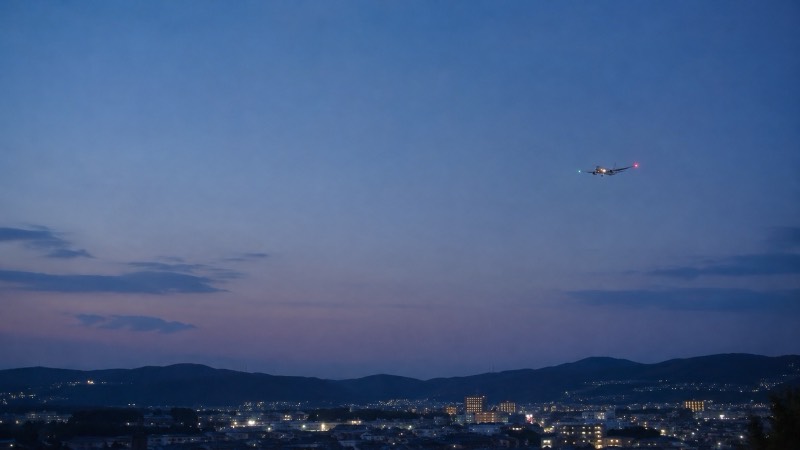
Identifying Planes Overhead with Flightradar24
How to check the flight, aircraft type and altitude of a plane overhead on Flightradar24, and how to recognize aircraft by their red, green and white lights.
ReadKnown phenomena often mistaken for UFOs
Read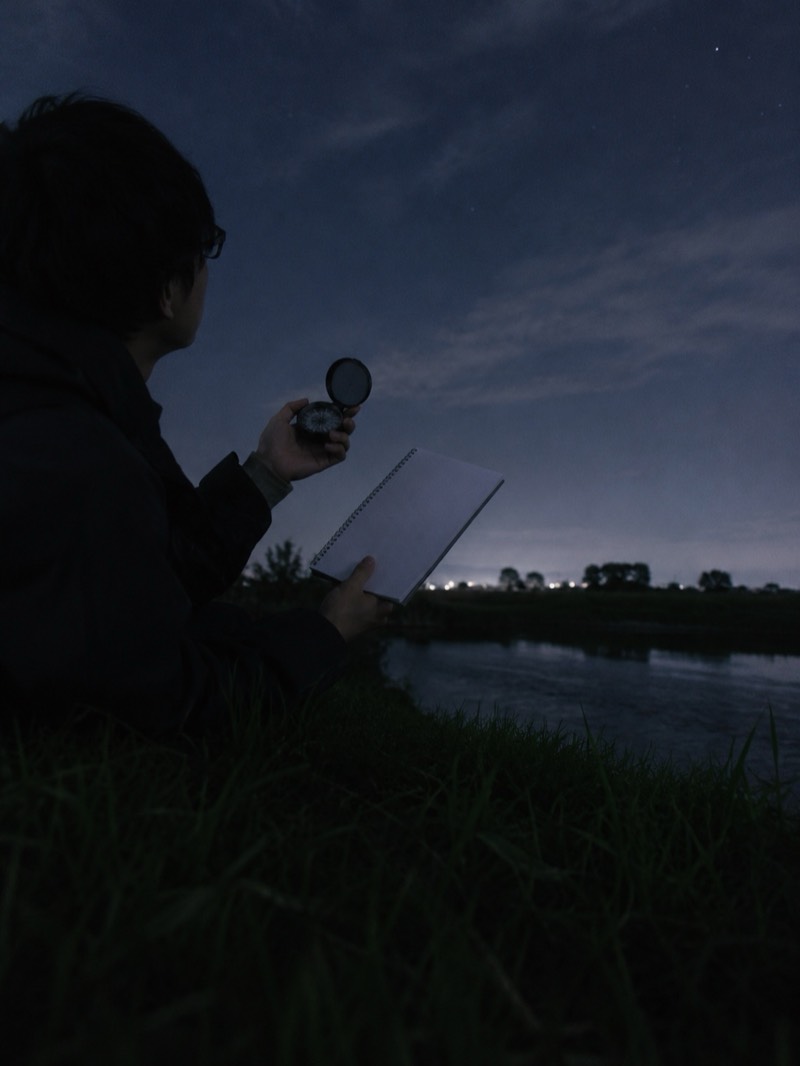
5 Things to Check About a Light in the Night Sky
Five observation points for identifying lights in the night sky. Based on NAOJ's list, a step-by-step guide and table for planets, satellites, contrails and more.
Read