
Key points
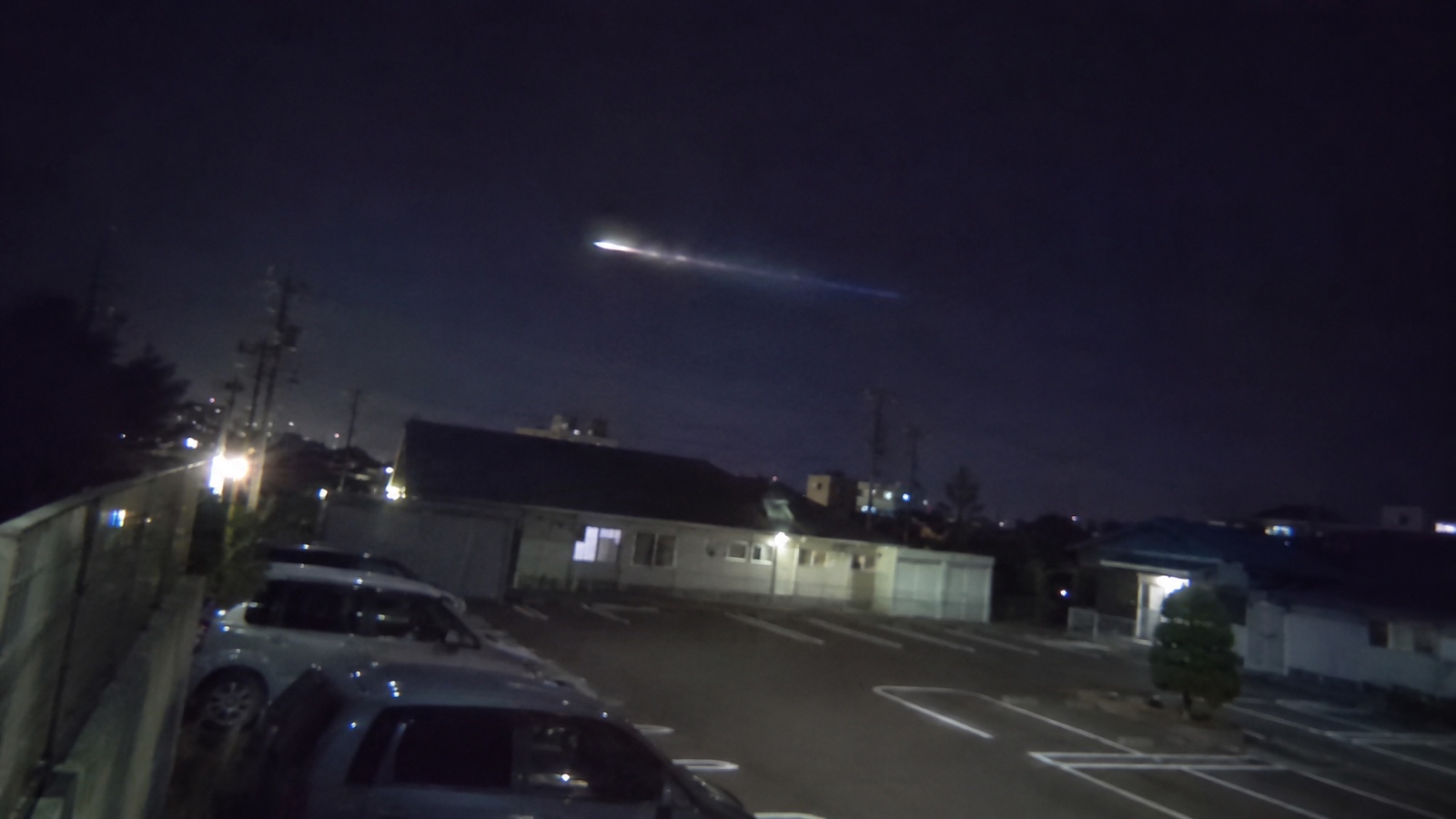
- Strange glowing clouds shortly after sunset or before sunrise are very often rocket exhaust plumes, sometimes called the "twilight phenomenon" or a "space jellyfish."
- High above the ground the Sun is still shining, so the plume glows brightly while the sky around you is already dark.
- In the thin upper atmosphere the exhaust spreads out quickly into wide fans, rings and jellyfish shapes.
- Spirals are usually made by a spinning rocket stage releasing gas or leftover fuel.
- Launch schedules, and many people reporting the same thing at the same time, make these sightings easy to confirm.
Every so often, social media fills up with photos of a glowing spiral, a giant luminous jellyfish, or a bright point surrounded by an expanding ring, seen shortly after sunset or before sunrise. These sightings often look unlike anything familiar, and they are often reported as UFOs. In most cases they are rocket launches, seen from far away.
Why rocket exhaust glows in the twilight
After the Sun sets for you, it is still shining on the upper atmosphere for a while. A rocket climbing through that sunlit layer leaves an exhaust plume that catches the light and glows against a dark sky. Because it is so high, it can be seen from hundreds of kilometers away, far from the launch site.
At high altitude the air is so thin that the exhaust expands quickly and widely. Instead of the narrow trail you see near the ground, it spreads into fans, cones, rings and the soft, trailing shape people describe as a jellyfish. The rocket itself may appear as a bright point at the center or the tip.
Why some look like spirals
A spiral usually comes from a rocket stage that is spinning while it releases gas or leftover propellant. As the stage rotates, the released material is thrown out in a curve, and sunlight makes it glow. Spiral sightings have been linked to upper stages venting fuel after their mission and to failed missile tests; a widely reported spiral over northern Norway in December 2009 was attributed to a Russian missile test.
How to check
- 1Note the time. Rocket plumes are most visible within roughly an hour or two of sunset or sunrise.
- 2Search for launches that evening or morning. Public launch schedules list the time and site of upcoming launches.
- 3Look for other reports. A launch plume is seen by many people over a wide area at the same time, so social media and news reports usually appear within minutes.
- 4Watch how it changes. A plume slowly spreads and fades over several minutes; a rocket moves steadily in one direction.
| What you see | Likely |
|---|---|
| Glowing fan, ring or jellyfish shape at dusk or dawn that slowly spreads | Rocket exhaust plume lit by the Sun |
| A glowing spiral that expands and fades | A spinning rocket stage releasing gas or propellant |
| A slow cluster of glowing pieces with trails, breaking apart | A rocket stage or debris re-entering the atmosphere |
| A short, fast streak | A meteor |
Strange is not the same as unknown
FAQ
What is the jellyfish-shaped light in the sky?+
Usually the exhaust plume of a rocket launch, lit by sunlight high in the atmosphere while the sky around you is dark. It is sometimes called a space jellyfish or the twilight phenomenon.
Why was there a spiral light in the sky?+
Spirals are usually made by a spinning rocket stage releasing gas or leftover fuel, which sunlight makes glow. Check launch schedules for that evening or morning.
Why can I see a rocket launch from so far away?+
The plume rises so high that it can be seen from hundreds of kilometers away, and it glows in sunlight even after the ground has gone dark.
UFO Kanteishi Exam, Grade 3
Free, no account needed. 20 questions on observing, recording and cross-checking. Pass and get a certificate with a verifiable number.
To become a Licensed UFO Kanteishi, take Grade 2 (Official Guide + exam).
Related reading
What is that bright light in the sky tonight? (live sky check)
Read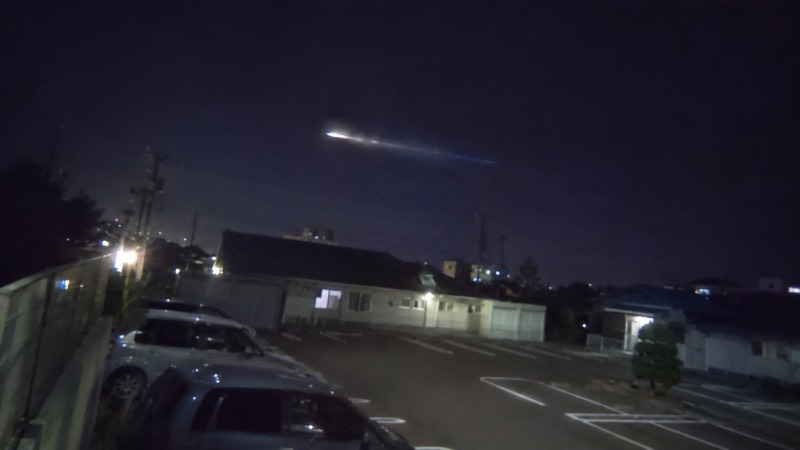
Rocket Reentries vs. UFOs: How to Tell
A fireball that drifts slowly for tens of seconds while breaking apart may be rocket debris or a satellite reentering. How it differs from a meteor, with reported cases.
Read
UFO Identification Chart
Steady, blinking, color-flashing, a line of lights, a hovering light: a chart that matches common sightings to their likely explanations and to tools for checking them.
Read
Fireballs vs. UFOs: How to Tell
Most bright balls of fire crossing the sky are fireballs (bright meteors). Breakup, glowing trains and delayed sound: what to look for to tell them from UFOs.
Read